Living in a studio apartment means every square inch matters, and nowhere is this truer than in your kitchen. That awkward corner or narrow wall might seem like a lost cause, but it’s actually the perfect spot for a 24-inch compact wall oven—a game-changing appliance that delivers full-size performance without demanding full-size real estate. The challenge? Finding a top-rated model that won’t devour your entire renovation budget. With $1200 as your ceiling, you’re not just shopping for an oven; you’re strategically investing in a tool that must work harder, smarter, and more efficiently than its larger counterparts.
The compact wall oven market has exploded with options that prove you don’t need massive capacity or premium price tags to achieve exceptional cooking results. Today’s budget-friendly models pack surprising technology into slim profiles, offering features like convection cooking, precise temperature control, and self-cleaning capabilities that were once reserved for luxury appliances. But navigating this space requires more than just comparing spec sheets—it demands an understanding of what features truly matter in tight quarters, which corners can be safely cut, and where spending a few extra dollars pays dividends in daily usability. This guide walks you through everything you need to know before making your decision, ensuring your investment delivers maximum culinary impact in minimal space.
Top 10 Compact Wall Ovens for Studio Apartments
Detailed Product Reviews
1. Empava 24 inch Electric Single Wall Oven with 6 Cooking Modes, Convection Fan, Mechanical Knob Control, 2.3 Cu.ft. Capacity, 2800W

Overview:
The Empava 24-inch electric wall oven delivers reliable performance in a compact footprint. With 2.3 cubic feet capacity and six cooking modes, this 2800W unit features mechanical knob controls that appeal to traditionalists. The convection fan ensures even heat distribution, while the triple-layer glass window provides safe viewing. Perfect for smaller kitchens or as a secondary oven.
What Makes It Stand Out:
Mechanical knob controls offer straightforward operation without digital complexity. The triple-layer glass door and hidden heating elements prioritize safety and easy cleaning. The Delay Bake feature allows programming up to 120 minutes in advance, and the Keep Warm function maintains perfect serving temperatures. Its seamless integration with Empava cooktops creates a cohesive kitchen aesthetic.
Value for Money:
At $481.07, this oven sits in the mid-range category. While priced similarly to competitors with fewer features, the durable construction and safety features justify the cost. Mechanical controls may lack precision but offer reliability that digital interfaces can’t match. For those valuing simplicity over flashy technology, the price feels fair.
Strengths and Weaknesses:
Strengths include intuitive mechanical controls, excellent safety features, easy-clean ceramic interior, delay bake convenience, and solid 2.3 cu ft capacity. The triple-layer glass door keeps exterior cool while retaining heat efficiently.
Weaknesses are limited to six cooking modes versus competitors’ eight to ten options, no rotisserie function, and mechanical knobs that lack the precision of digital touch controls. The capacity is slightly smaller than some alternatives.
Bottom Line:
An excellent choice for cooks who prefer traditional knob controls and value safety features. While not the most feature-rich, its reliability and ease of use make it a solid mid-range investment.
2. Midea 24" Mechanical Single Wall Oven, 2.5 Cu. Ft.-Capacity, Built-in Oven with 8-in-1 Cooking Modes, Stainless Steel

Overview:
Midea’s 24-inch mechanical wall oven combines classic control with modern convection technology. The 2.5 cubic foot capacity offers slightly more space than competitors, while eight cooking modes provide versatility. Turbo convection ensures fast, even cooking, and the stainless steel exterior delivers a professional look. Built-in installation fits standard cabinet depths.
What Makes It Stand Out:
The Turbo Convection technology cooks food faster and more energy-efficiently than standard convection. Eight specialized modes including Defrost and Double Grill with Fan offer more versatility than knob-controlled competitors. The triple-layer door with auto shut-off and dual cooling system provides superior safety. Its enamel cavity, while different from ceramic, offers easy cleaning.
Value for Money:
Priced at $484.99, this oven competes directly with similar models but offers larger capacity and more cooking modes. The stainless steel construction and advanced safety features add value. For those wanting mechanical reliability with modern cooking technology, this represents fair market value.
Strengths and Weaknesses:
Strengths include generous 2.5 cu ft capacity, eight versatile cooking modes, energy-efficient turbo convection, robust safety systems, and easy-clean enamel interior. The stainless steel finish resists fingerprints and looks premium.
Weaknesses are mechanical controls that lack digital precision, no rotisserie feature, enamel interior may stain more than ceramic, and no mention of delay bake functionality. The control knobs may feel dated to some users.
Bottom Line:
A strong contender for those wanting mechanical simplicity with modern features. The larger capacity and eight modes make it worth considering over basic models.
3. Empava 24 inch Electric Single Wall Oven with 10 Cooking Funcitons, Stainless Steel Built-in Wall Convection Oven with Screen Touch Control, 360° Rotisserie, Silver

Overview:
The Empava 24-inch electric wall oven with touch controls offers premium features at an entry-level price. Ten cooking functions, 360° rotisserie, and convection technology come in a 2.3 cubic foot stainless steel package. ETL certification and a two-year limited warranty provide peace of mind. Compatible with 24-30 inch cooktops for flexible installation.
What Makes It Stand Out:
Touch controls with control lock safety offer modern precision at a budget price. The 360° rotisserie function is rare in this category and price range. Ten cooking modes exceed most competitors. At $362.81, it’s significantly cheaper than similar models while offering more features. The two-year warranty demonstrates manufacturer confidence.
Value for Money:
Exceptional value. This oven undercuts competitors by over $100 while adding premium features like rotisserie and touch controls. The ETL certification and warranty eliminate concerns about build quality. It’s arguably the best feature-per-dollar ratio in the 24-inch wall oven market.
Strengths and Weaknesses:
Strengths include unbeatable price, ten cooking modes, 360° rotisserie, intuitive touch controls with safety lock, delay bake and keep warm functions, ETL certification, and two-year warranty. The black ceramic interior hides heating elements for easy cleaning.
Weaknesses include 2.3 cu ft capacity (smaller than some), touch controls may confuse traditional cooks, and the lower price might suggest compromised longevity (though warranty counters this).
Bottom Line:
The value champion. Feature-packed, safety-conscious, and remarkably affordable. Unless you need maximum capacity, this should be your first choice.
4. Empava 24 Inch Electric Single Wall Oven with 10 Cooking Modes, Convection Fan and Rotisserie, Screen Touch Control, Stainless Steel

Overview:
Empava’s premium 24-inch wall oven combines professional-grade features with sleek design. Ten cooking modes, convection technology, and a 360° rotisserie serve up restaurant-quality results in a 2.3 cubic foot capacity. Glass touch controls with safety lock provide precise operation, while the stainless steel finish complements modern kitchens. ETL certified with two-year warranty.
What Makes It Stand Out:
Professional-grade cooking results with precise preheat function eliminate cold spots. The 360° rotisserie delivers perfectly juicy roasts. Intuitive touch controls with safety lock prevent accidental changes. Seamless integration with Empava cooktops creates a unified kitchen aesthetic. The triple-layer glass door ensures safe operation.
Value for Money:
At $558.19, this oven commands a premium price. While feature-rich with ten modes and rotisserie, it’s nearly identical to Product 3 but costs $175 more. The price premium may reflect newer manufacturing or improved components, but specifications don’t clearly justify the difference. Shop around for sales.
Strengths and Weaknesses:
Strengths include comprehensive ten-mode cooking system, excellent rotisserie function, precise touch controls with safety lock, delay bake and keep warm features, easy-clean ceramic interior, and reliable warranty coverage.
Weaknesses are the high price compared to similar models, identical 2.3 cu ft capacity to cheaper alternatives, and lack of clear differentiation from less expensive Empava options. Budget-conscious buyers will balk.
Bottom Line:
A capable, feature-rich oven overshadowed by its own sibling product. Consider this only if Product 3 is unavailable or you find it at a significant discount.
5. Empava Built-In Electric Single Wall Oven 24 inch with Convection and Rotisserie 10 Cooking Modes, Screen Touch Control, Black

Overview:
The Empava black built-in wall oven offers the same core functionality as its stainless siblings with a darker aesthetic. Ten cooking modes, convection, and 360° rotisserie come in a 2.3 cubic foot package. Touch controls and ETL certification maintain the standard feature set. Designed to pair with 24-30 inch Empava cooktops for coordinated kitchen design.
What Makes It Stand Out:
The black ceramic interior stylishly hides messes while maintaining easy cleanup. Same ten cooking modes and rotisserie function as premium models. The streamlined design focuses on essential features without unnecessary complexity. Triple-layer glass door and safety lock provide family-friendly operation. Preheat function ensures even temperature distribution throughout the cavity.
Value for Money:
At $546.65, this oven sits between Products 3 and 4 in pricing. It offers the same features as the $363 model but costs $184 more. The black interior is the main differentiator. Unless the aesthetic justifies the premium, better value exists elsewhere in the Empava lineup, making this a questionable purchase at full price.
Strengths and Weaknesses:
Strengths include versatile ten-mode cooking, convenient rotisserie, even-heating preheat function, easy-clean black ceramic interior, touch controls with safety lock, and reliable two-year warranty coverage.
Weaknesses are the high price relative to similar models, no capacity advantage at 2.3 cu ft, and limited differentiation from cheaper alternatives. The black interior, while stylish, doesn’t warrant the substantial cost premium.
Bottom Line:
A solid performer hampered by awkward pricing. Choose this only if you specifically want the black interior and find it on sale. Otherwise, Product 3 delivers better value.
6. Wall Ovens 24 inch Electric, AMZCHEF 24 inch Wall Oven, 2200w Single Wall Oven with 6 Cooking Modes, 2.5 Cu.Ft. Electric Wall Oven, Convection Oven with Mechanical Knobs Control, Stainless Steel

Overview: The AMZCHEF 24-inch electric wall oven delivers reliable performance in a compact 2.5 cubic foot package. With six cooking modes and 2200W convection heating, it handles daily meals and family feasts. Mechanical knob controls provide intuitive operation without complicated digital interfaces, appealing to traditionalists.
What Makes It Stand Out: This oven distinguishes itself with user-friendly mechanical controls that offer tactile feedback over touchscreens. The convection system ensures even heat distribution across all modes, while the built-in halogen lamp provides clear visibility through the tempered glass door. A safety lock adds peace of mind for households with children. The generous 120°F to 480°F temperature range accommodates diverse cooking needs, and the manufacturer guarantees 24-hour customer service response.
Value for Money: At $439.99, this AMZCHEF model sits in the competitive mid-range for 24-inch wall ovens. It offers convection cooking and a safety lock—features often reserved for pricier models—while maintaining affordability. Compared to premium brands costing $600+, you sacrifice some power and digital conveniences but retain core functionality. The 2.5 cu. ft. capacity matches many higher-priced competitors, making it a smart choice for budget-conscious renovators.
Strengths and Weaknesses: Strengths include the convection system for even baking, straightforward mechanical controls ideal for non-tech-savvy users, comprehensive safety lock, responsive customer service promise, and wide temperature range. The 2.5 cu. ft. capacity suits most families. Weaknesses involve the lower 2200W power output versus 2800W+ alternatives, potentially slower preheating. Mechanical knobs lack digital precision, and the two-hour timer may limit slow-roasting tasks. Installation requires exact cutout dimensions.
Bottom Line: The AMZCHEF 24-inch wall oven excels for those prioritizing simplicity, safety, and solid performance over high-tech features. It’s an excellent value for first-time homeowners or rental properties where reliable basics matter most. If you want convection cooking without the premium price tag and prefer old-school controls, this oven deserves serious consideration.
7. COMFEE’ Countertop Oven, Small Toaster Oven Combo 4 slice, Mini Oven for 9" Pizza, Compact Oven, Bake, Broil, 950W, White, CTO-E101A(WH)

Overview: The COMFEE’ CTO-E101A(WH) is an ultra-compact countertop oven bringing essential cooking functions to space-constrained kitchens. This 950W unit handles toast, bake, and broil tasks in its 10-liter capacity, accommodating up to four bread slices or a 9-inch pizza. Designed for simplicity, it targets dorm rooms, small apartments, and office kitchens.
What Makes It Stand Out: Remarkable affordability meets practical design in this miniature powerhouse. The 30-minute timer includes a stay-on function for extended cooking, while the wide 150°F to 450°F temperature range covers diverse recipes. Three included accessories—baking rack, pan, and crumb tray—add value rarely seen at this price. Its clean white finish and minimal footprint make it disappear on countertops when not in use.
Value for Money: At $39.99, this COMFEE’ oven redefines budget cooking appliances. It’s priced below most standalone toasters while offering baking and broiling capabilities. Competing compact ovens start around $60-80 with similar features. You’re sacrificing power and capacity, but for single users or secondary cooking needs, the value proposition is undeniable. The included accessories eliminate extra purchases.
Strengths and Weaknesses: Strengths include exceptional affordability, space-saving design, simple operation, adequate temperature range, useful accessories, and easy cleaning with the detachable crumb tray. It’s perfect for quick tasks and small portions. Weaknesses involve the low 950W power resulting in longer cooking times, limited 10-liter capacity unsuitable for families, basic functionality without convection, and potential durability concerns. The 30-minute timer restricts longer recipes.
Bottom Line: The COMFEE’ countertop oven is a no-brainer for students, singles, or anyone needing a secondary oven without financial commitment. It won’t replace your main oven but excels at daily toasting and small-batch baking. If space and budget are your primary constraints, this delivers surprising functionality. Set realistic expectations about capacity and speed, and you’ll find an indispensable kitchen companion.
8. AMZCHEF Single Wall Oven 24" Built-in Electric Ovens with 11 Functions, 8 Automatic Recipes, 2800W, 240V, 2.5Cu.f Convection Wall Oven in Stainless Steel, Touch Control, Timer, Safety Lock,Upgraded

Overview: This upgraded AMZCHEF 24-inch built-in electric wall oven elevates kitchen performance with 11 functions and 8 automatic recipe programs. The 2800W convection system delivers professional-grade results in a 2.5 cubic foot capacity. Touch controls and a multifunctional timer modernize the cooking experience while maintaining essential safety features.
What Makes It Stand Out: The eight automatic programming modes—including pizza, chicken leg, bread, and cake—eliminate guesswork with pre-set temperatures and times. The powerful convection system ensures superior heat circulation for consistent results. A multifunctional timer doubles as a clock and programmable on/off switch, adding convenience. The safety lock secures against accidental operation, while the 240V power supply enables rapid preheating. Touch controls provide precise adjustments.
Value for Money: Priced at $469.98, this upgraded model commands a $30 premium over the mechanical version but delivers substantial improvements. The 2800W output matches premium competitors, while automatic programs rival ovens costing $600+. You’re getting smart features, enhanced power, and touch precision for mid-range money. For tech-savvy cooks wanting convenience without breaking $500, this represents exceptional value.
Strengths and Weaknesses: Strengths include powerful 2800W convection cooking, 11 versatile functions, time-saving automatic recipes, intuitive touch controls, multifunctional timer, child safety lock, and standard 2.5 cu. ft. capacity. The modern interface appeals to contemporary homeowners. Weaknesses involve a steeper learning curve than mechanical models, dependency on electrical compatibility (240V required), and potential repair costs if digital components fail. Touch controls may frustrate users preferring tactile feedback.
Bottom Line: The upgraded AMZCHEF wall oven is ideal for homeowners seeking modern convenience and cooking power at a reasonable price. Automatic programs simplify meal prep, while robust convection handles serious baking. It’s a significant step up from basic models without premium-brand pricing. If you’re comfortable with digital controls and want chef-like results, this oven delivers exceptional performance per dollar.
9. Empava 24" 10 Cooking Functions W/ Rotisserie Electric LED Digital Display Touch Control Built-in Convection Single Wall Oven EMPV-24WOC02

Overview: The Empava EMPV-24WOC02 combines versatility and value in a 24-inch built-in convection wall oven. With 10 cooking functions including rotisserie, this model targets serious home cooks seeking premium features at an accessible price. The LED digital display and touch controls modernize operation, while the 2.5 cu. ft. capacity handles family-sized meals.
What Makes It Stand Out: The rotisserie function sets this apart from most wall ovens in its class, enabling restaurant-quality roasted meats. Ten cooking modes—including true convection broil and specialized preheat—provide exceptional flexibility. The forced cooling exhaust system enhances safety by rapidly dissipating heat after use. Two-layer tempered glass improves insulation and exterior safety, while the enamel interior simplifies cleaning. Five rack positions offer superior customization.
Value for Money: At $362.81, this Empava model undercuts most competitors while offering features typically found in $500+ ovens. The rotisserie alone justifies the price for meat enthusiasts. Compared to AMZCHEF’s mechanical model at $440, you gain digital controls and rotisserie for less money. While wattage isn’t specified, the feature set represents outstanding value for renovation projects on tight budgets.
Strengths and Weaknesses: Strengths include the unique rotisserie capability, comprehensive 10-function versatility, digital touch controls, enhanced safety with dual-layer glass and cooling exhaust, easy-clean enamel interior, and five rack positions. The modern aesthetic suits contemporary kitchens. Weaknesses involve unspecified power output potentially limiting performance, brand recognition concerns versus established names, and potentially longer-term reliability unknowns. The rotisserie mechanism adds complexity that could require maintenance.
Bottom Line: The Empava wall oven is a feature-packed bargain for cooking enthusiasts wanting rotisserie capability without premium pricing. It sacrifices some power transparency for functionality, but the versatility is undeniable. Ideal for budget renovations, RVs, or rental properties where impressive features matter. If rotisserie cooking appeals to you and you’re comfortable with a value brand, this oven delivers exceptional bang for your buck.
10. Empava Built-In Electric Single Wall Oven 24 inch, 2.5 Cu. ft. Capacity 4 Cooking Modes, Knob Control, 2950 Watts, Stainless Steel
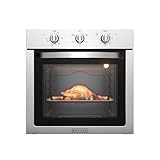
Overview: This Empava 24-inch built-in wall oven prioritizes power and durability over feature complexity. With 2950W output and 2.5 cubic feet of capacity, it handles heavy-duty cooking tasks through four essential modes. The knob-controlled interface and robust construction target users who value simplicity and performance above digital frills.
What Makes It Stand Out: The 2950W power rating leads its class, enabling exceptionally fast preheating and superior heat recovery when loading cold food. Triple-layer glass construction maximizes heat retention and exterior safety, surpassing double-layer competitors. The black ceramic interior resists staining better than traditional enamel and wipes clean effortlessly. Heavy-duty racks support substantial loads without flexing, ideal for large roasts and multi-tray baking. Halogen lighting provides superior visibility.
Value for Money: At $539.99, this Empava commands premium pricing within the value segment. You’re paying for raw power and build quality rather than numerous functions. Compared to AMZCHEF’s $470 touchscreen model, you gain 150W but lose automatic programs and digital controls. For cooks who prioritize performance over presets, the investment makes sense. However, feature-conscious buyers may find better value elsewhere.
Strengths and Weaknesses: Strengths include best-in-class 2950W power, superior triple-layer glass door, durable black ceramic interior, heavy-duty rack construction, effective halogen lighting, and straightforward knob controls. The high power ensures professional results. Weaknesses involve limited four-function versatility, lack of convection (not mentioned in features), no automatic programs, basic timer functionality, and premium pricing for a minimal-feature set. The knob interface may feel dated to some users.
Bottom Line: This Empava oven suits serious cooks who value power and durability over gadgetry. It’s built for performance, not presets, making it ideal for experienced home chefs who know their temperatures and times. If you want a tank-like oven that heats fast and holds heat well, this is your match. However, if you desire convenience features or convection, consider alternatives. It’s a specialist’s tool, not an all-rounder.
Understanding the 24-Inch Compact Wall Oven Market
The compact appliance segment has evolved dramatically over the past five years. Manufacturers have recognized that urban dwellers and small-space homeowners aren’t willing to compromise on cooking performance, even when square footage is at a premium. This shift has created a competitive sub-$1200 category where engineering ingenuity meets practical affordability.
Market Positioning and Price Tiers
At the under-$1200 price point, you’re positioned in the sweet spot between basic builder-grade models and mid-tier appliances. This range typically excludes premium features like steam injection or Wi-Fi connectivity, but generously includes true convection systems, digital controls, and durable construction. Understanding this positioning helps set realistic expectations while recognizing the genuine value available.
Brand Landscape in Compact Sizes
Unlike standard 30-inch ovens where a dozen major players compete, the 24-inch category features a more concentrated field. European and Asian manufacturers have historically dominated this space, bringing their expertise in small-space living to North American markets. Domestic brands have recently expanded their offerings, often focusing on straightforward functionality over exotic features.
Why Size Matters: The Studio Apartment Challenge
That 24-inch measurement isn’t arbitrary—it represents a carefully calculated balance between cooking capability and spatial efficiency. In studio apartments, where kitchen walls might be shared with living or sleeping areas, every dimensional decision ripples through your entire living experience.
The Six-Inch Difference
Stepping down from a standard 30-inch oven saves more than just width. You’re typically reducing depth requirements by 2-3 inches and gaining flexibility in installation height. This seemingly modest difference can transform an awkward corner into a functional cooking zone or allow for a microwave drawer below without violating ergonomic clearances.
Visual Proportion and Flow
A 24-inch oven creates less visual mass, preventing your kitchen from feeling like it dominates the entire studio. The slimmer profile integrates more gracefully into mixed-use spaces, especially when finished with panels that match surrounding cabinetry. This integration trick makes the kitchen feel like a considered design element rather than an appliance warehouse.
Key Features to Prioritize in Budget-Friendly Models
When every dollar counts, feature prioritization becomes an exercise in strategic compromise. The trick is distinguishing between marketing fluff and genuinely useful functionality that enhances daily cooking.
True Convection vs. Standard Thermal
True convection—featuring a third heating element around the fan—should be non-negotiable even at this price point. This technology eliminates hot spots and reduces cooking times by up to 25%, effectively giving you more oven capacity through efficiency. Standard thermal ovens in compact sizes often struggle with even heating, making convection a practical necessity rather than a luxury.
Rack Configuration Flexibility
Look for models offering at least four rack positions and including one standard rack plus one offset rack. This combination allows simultaneous cooking of disparate items—a crucial capability when you’re preparing entire meals in a single oven. Some budget models skimp on rack quality, so verify they’re solid metal rather than thin wires that warp under heat.
Interior Lighting Quality
Poor lighting transforms oven monitoring into a guessing game. LED lighting systems with multiple vantage points prevent you from opening the door unnecessarily, maintaining temperature stability in the small cavity. This seemingly minor feature significantly impacts cooking consistency and energy efficiency.
Essential Cooking Technologies Explained
Understanding the mechanics behind cooking technologies empowers you to evaluate specifications critically rather than relying on marketing claims.
Convection Fan Variations
Not all convection systems perform equally. A bidirectional fan that reverses direction during cooking distributes heat more effectively than unidirectional models. Some ovens offer variable fan speeds, allowing gentle convection for delicate pastries and aggressive circulation for roasted meats. At sub-$1200, expect at least single-speed bidirectional fans in quality models.
Broiler Element Placement
Top-mounted broilers with full-width coverage deliver superior browning compared to partial elements. In compact ovens, broiler performance often separates mediocre models from exceptional ones. Check wattage—aim for at least 3000 watts for effective searing and gratinee work.
Temperature Probe Integration
Even budget-conscious models increasingly include basic probe functionality. This feature eliminates guesswork for roasts and poultry, crucial when you’re cooking expensive proteins and can’t afford inconsistency. Verify the probe is included rather than an additional purchase; some manufacturers advertise compatibility but ship without the actual probe.
Installation Considerations for Small Spaces
Compact wall ovens demand precise installation planning, especially in studio apartments where wall structures may be non-standard.
Cutout Dimension Tolerances
Manufacturers specify cutout dimensions with minimal tolerance—typically within 1/8 inch. Older studio buildings often have irregular framing, so choose models with slightly larger trim kits that can mask minor misalignments. Always measure the actual unit, not just the cutout specs, accounting for door swing and handle projection.
Weight Distribution and Wall Reinforcement
A 24-inch oven still weighs 120-150 pounds. Standard drywall cannot support this load. Verify your wall contains adequate studs or plan for reinforcement. Some budget installations fail because owners skip this step, leading to sagging or dangerous instability.
Installation Height Ergonomics
In studios, you might be tempted to install the oven unusually high or low to accommodate other functions. Remember that you’ll be lifting hot, heavy dishes. The ideal height places the oven rack at roughly counter level when fully extended—typically 30-36 inches from the floor.
Electrical Requirements and Power Constraints
Studio apartments often have limited electrical service, making power requirements a critical consideration before purchase.
Voltage and Amperage Realities
Most 24-inch ovens require a 240-volt, 30-amp circuit. Some compact models offer 208-volt compatibility for buildings with commercial-grade electrical systems. Verify your panel capacity before falling in love with a specific unit—upgrading electrical service can quickly double your total investment.
Plug Type and Location
Oven plugs are typically hardwired, but some newer models use NEMA 14-30P plugs. The location of the junction box matters tremendously in tight walls. A recessed box can save precious depth, while a poorly positioned box might force you to choose a different model entirely.
Energy Consumption Patterns
Compact ovens inherently use less energy, but convection fans and rapid preheat features draw significant power. If your studio has overall amperage limitations, look for models with eco-modes that stagger power draw. This prevents tripping breakers when your oven, air conditioner, and other appliances run simultaneously.
Ventilation Solutions for Compact Kitchens
Proper ventilation becomes paramount when your living space shares air with the kitchen. A 24-inch oven’s smaller door means less steam escape during operation, but inadequate ventilation still impacts comfort and air quality.
Integrated Ventilation Systems
Many modern compact ovens feature front-venting designs that direct hot air away from cabinetry and into the room. While this eliminates complex ductwork, it requires careful placement away from seating areas. Some models offer convertible ventilation that can be ducted or recirculated—valuable flexibility for renters.
Companion Range Hood Requirements
If you’re installing above a cooktop, the hood must match the oven’s 24-inch width. Oversized hoods visually overwhelm the space, while undersized units won’t capture effluent effectively. Look for slim-profile hoods with at least 400 CFM for electric cooktops, recognizing that higher CFM ratings may require makeup air solutions.
Passive Ventilation Strategies
In studios where active ventilation is impossible, consider the oven’s proximity to windows and the direction of door swing. Some chefs position a small, quiet fan near the oven to create air movement without the noise and expense of a full range hood.
Interior Capacity: Maximizing Every Cubic Inch
The difference between 2.0 and 2.5 cubic feet significantly impacts what you can cook, yet manufacturers often obscure these numbers in marketing materials.
Real-World Capacity Testing
Don’t trust stated capacity alone. A 2.2 cubic foot oven with poor rack design holds less usable food than a 1.8 cubic foot oven with smart configuration. Consider your actual cookware: Will your half-sheet pan fit? Can you roast a 15-pound turkey? These practical questions matter more than abstract volume numbers.
Door Design and Usable Depth
Compact ovens with flush-door designs sacrifice interior depth for sleek aesthetics. Traditional doors that protrude slightly often provide more usable space. Examine the door’s interior surface—flat profiles accommodate larger dishes better than contoured designs with pronounced curves.
Multi-Level Cooking Reality
The ability to cook on two levels simultaneously effectively doubles your capacity. This requires not just rack positions, but consistent heat distribution across those levels. Convection becomes even more critical here, as thermal ovens often produce dramatically different results between top and bottom racks.
Control Panel Types: Digital vs. Mechanical
Interface design impacts both usability and long-term reliability, particularly important when you’re investing in a budget appliance you expect to last.
Digital Control Precision
Modern digital panels offer precise temperature settings in 5-degree increments, multiple cooking modes, and delayed start functionality. However, they introduce electronic complexity that can fail. Look for models with membrane-sealed panels that resist moisture and have straightforward replacement procedures.
Mechanical Control Durability
Traditional knob controls eliminate electronic failure points and often cost less to repair. The trade-off is less precision—you might set the dial to 375°F but actually get 360°F or 390°F. For many cooking tasks, this variance is acceptable, but it requires learning your oven’s personality.
Hybrid Approaches
Some budget models combine mechanical temperature dials with digital timers and mode selectors. This approach provides reliability where it matters (temperature control) while offering convenience features for timing and specialized functions. Consider which aspects of cooking you value most when choosing between interface types.
Self-Cleaning Options: Are They Worth It?
The self-cleaning debate intensifies in compact ovens where space constraints make manual cleaning particularly challenging.
Pyrolytic High-Heat Cleaning
True self-cleaning uses 800-900°F temperatures to incinerate spills. This feature appears in some sub-$1200 models but often requires a 40-amp circuit. The process consumes significant energy and produces odors that permeate small apartments. For studios, the trade-off between convenience and livability deserves careful consideration.
Steam Cleaning Alternatives
Many budget ovens now include low-temperature steam cleaning cycles that soften grime for easy wiping. These use minimal energy and produce no fumes, making them ideal for studio living. The catch: they won’t handle heavy, baked-on messes, requiring more frequent light cleaning.
Manual Cleaning Realities
Ovens without automated cleaning features often feature better-quality porcelain coatings that resist staining. If you’re diligent about wiping spills when the oven cools, manual cleaning takes minimal effort. Consider your cleaning personality—are you a wipe-as-you-go cook or a deep-clean-weekly type?
Energy Efficiency Ratings and Cost Savings
Operating costs matter more in budget appliances, where efficiency gains directly impact your monthly utility bills.
Understanding ENERGY STAR Limitations
Currently, ENERGY STAR doesn’t certify wall ovens, making comparisons challenging. Instead, examine the Energy Guide label showing estimated annual operating cost. A $10 difference per year seems minor, but over a 10-year appliance lifespan, that’s $100—nearly 10% of your purchase price.
Insulation Quality Indicators
Better-insulated ovens maintain temperature with less energy input. Check the door weight—heavier doors typically indicate more insulation. Some manufacturers specify the number of door glass panels; triple-glazed doors retain heat better than double-glazed, though both appear in the sub-$1200 category.
Preheat Efficiency
Compact ovens should preheat to 350°F in under 8 minutes. Models taking longer waste energy and test your patience. Rapid preheat features use both bake and broil elements simultaneously, cutting preheat time by 30-40% but drawing maximum power. For studios with electrical constraints, standard preheat might be the smarter choice.
Safety Features for Small Living Spaces
In a studio, your oven shares space with your living area, making safety features non-negotiable rather than optional upgrades.
Automatic Shutoff Mechanisms
Look for ovens that automatically shut off after 12 hours of continuous operation. This prevents accidents if you forget to turn off the oven before leaving for work or falling asleep. Some models offer adjustable timers, allowing you to customize the shutoff window based on your cooking habits.
Control Lockout Capabilities
Control locks prevent accidental activation—a crucial feature when the control panel sits at hip height in a tight kitchen. This is especially valuable for pet owners or those who frequently host guests in their living space. The lock should engage easily but require a deliberate sequence to deactivate.
Cool-Touch Door Technology
Multi-layer door glass keeps exterior surfaces below 120°F during operation, preventing burns in tight quarters. This feature also improves energy efficiency. Test the door in showroom models if possible; significant heat on the exterior indicates poor insulation that will warm your entire studio.
Warranty and Support: What to Expect Under $1200
Budget pricing doesn’t have to mean budget protection, but expectations must align with price point realities.
Standard Warranty Coverage
Most compact ovens in this category offer one-year full warranties covering parts and labor. Some extend coverage on specific components: electronic controls might have two-year protection, while door springs could be covered for five years. Read the fine print to understand what’s actually protected.
Extended Warranty Value
Retailers will push extended warranties, typically costing 15-20% of the purchase price. For ovens under $1200, these often make financial sense only if they cover years 2-5 comprehensively. Calculate the cost versus likely repair expenses; a control board replacement can run $300-400, making a $150 warranty potentially worthwhile.
Service Network Considerations
Check manufacturer service networks before purchasing. A great oven becomes a nightmare if the nearest authorized technician is 100 miles away. Some brands offer mail-in service for smaller components, but door issues or installation problems require local support. Online reviews often reveal service quality more accurately than manufacturer claims.
Common Pitfalls When Shopping on a Budget
The sub-$1200 price point is littered with traps that seem like savings but become expensive mistakes.
The Rebranding Game
Some retailers sell identical ovens under different brand names at varying prices. Research model numbers carefully, looking at specifications rather than brand reputation. A $900 model might be the exact same unit as a $1100 “premium” version with different badges.
Ignoring Installation Kit Costs
That attractive $999 oven price often excludes essential installation components. Trim kits, junction boxes, and mounting hardware can add $100-200. Always calculate total installed cost, not just the appliance sticker price.
Overlooking Interior Dimensions
External 24-inch width doesn’t guarantee usable interior space. Some models have thick walls that reduce interior capacity by 20%. Bring a tape measure to showrooms and measure interior width, depth, and height yourself. Your favorite baking sheet should fit with at least an inch of clearance on all sides.
How to Compare Models Without Getting Overwhelmed
With dozens of options meeting your basic criteria, systematic comparison prevents decision paralysis while ensuring you don’t miss critical differences.
Create a Weighted Feature Matrix
List your must-have features (convection, self-cleaning, specific dimensions) and assign each a point value based on importance. Score each model objectively, letting the math guide your shortlist. This removes emotion from initial screening while highlighting true differentiators.
The Two-Week Research Rule
Spend one week gathering specifications and reviews without making any decisions. In week two, revisit your top three choices with fresh eyes. This cooling-off period reveals which features you genuinely value versus those that merely seemed impressive in marketing materials.
Leverage Virtual Showrooms
Many manufacturers offer augmented reality apps that project oven models into your actual kitchen space. While not perfect, these tools help visualize scale and proportion in your unique studio layout. Pay attention to door swing arcs and handle projections that might interfere with adjacent cabinets or traffic paths.
Frequently Asked Questions
Will a 24-inch oven actually cook food as evenly as a full-size model?
Yes, when equipped with true convection. The smaller cavity actually works in your favor, as fans circulate air more efficiently. The key is ensuring the model has a third heating element around the fan, not just a fan blowing ambient air. Quality compact ovens often outperform basic full-size thermal ovens in evenness tests.
Can I install a 24-inch wall oven myself to save money?
While technically possible for those with electrical experience, professional installation is strongly recommended. The 240-volt connection presents serious shock hazards, and improper support can lead to catastrophic failure. Many retailers offer installation packages under $200, which includes warranty protection that self-installation voids.
What’s the smallest cutout dimensions I can get away with?
Most 24-inch ovens require a cutout of 22-1/8 inches wide, 23-1/2 inches deep, and 27-1/2 inches high. However, some European models need only 21-1/2 inches width. Always measure your specific model’s requirements and add 1/4 inch for installation tolerance. Never assume “24-inch” is a standard cutout dimension.
How long should a budget compact oven last?
With proper care, expect 10-12 years of service. Budget models use simpler components that can be more reliable than complex premium features. The most common failure points are electronic controls and door hinges. Regular cleaning and avoiding slamming the door significantly extend lifespan.
Will my electricity bill spike with a new wall oven?
Modern compact ovens are remarkably efficient, typically costing $40-60 annually to operate. If replacing a decades-old model, you might actually see savings. The convection feature reduces cooking times by 25%, further lowering energy use. The bigger impact comes from preheat frequency—batch cooking saves more money than any efficiency rating.
Can I fit a standard half-sheet pan in a 24-inch oven?
Most quality models accommodate an 18x13-inch half-sheet pan, but verify interior width exceeds 19 inches. Some “24-inch” ovens have interior widths of only 17-1/2 inches due to thick insulation. Bring your actual cookware when measuring showroom models to avoid disappointment.
Is a Sabbath mode important if I’m not religious?
Sabbath mode disables automatic shutoff and keeps heating elements continuously active, which can be useful for very low-temperature dehydration or proofing bread. However, it consumes energy and poses safety concerns in small spaces. For most users, it’s a non-essential feature that shouldn’t influence purchase decisions.
What’s the noise level like during convection cooking?
Quality compact ovens produce 45-55 decibels—similar to a quiet conversation. Budget models might reach 60-65 decibels, noticeable but not intrusive. Fan noise often decreases after the first month as bearings break in. If noise is a concern, read reviews specifically mentioning sound levels, as manufacturers rarely publish this data.
Can I stack a microwave above a 24-inch wall oven?
Yes, but with critical caveats. You need a separate 120-volt circuit for the microwave, and the combined height might exceed comfortable reach. Some manufacturers offer approved stacking kits. Ensure the microwave’s ventilation doesn’t recirculate into the oven’s electronics, which can cause premature failure.
How do I clean between the door glass panels?
This frustrating task is often necessary when spills drip between glass layers. Look for doors with removable inner glass panels—some budget models include this thoughtful feature. Otherwise, you’ll need to disassemble the door, which voids warranties. Preventative cleaning of door seals after each use is the best strategy for models without removable glass.