Transforming your kitchen with a built-in microwave oven is one of those upgrades that blends seamless aesthetics with functional brilliance—until you start shopping and realize most units cost as much as a weekend getaway. The good news? You don’t need to drain your renovation fund to get a reliable, stylish built-in microwave that nestles perfectly into your wall cabinet. The under-$500 category has evolved from a barren landscape of compromise to a surprisingly competitive market where smart shoppers can score impressive performance, modern features, and that coveted custom look.
But here’s the catch: not every microwave marketed as “built-in ready” actually deserves that title, and the path to finding the right unit involves more than just measuring your cabinet opening. From deciphering trim kit compatibility to understanding why wattage matters more than you think, this guide will walk you through everything you need to know before making your purchase. We’re diving deep into the specifications, installation nuances, and feature prioritization that separate a regrettable impulse buy from a kitchen upgrade you’ll love for years.
Top 10 Built-In Microwave Ovens for Wall Cabinets
Detailed Product Reviews
1. Frigidaire Gallery Series GMBS3068BF 2.2 cu. ft. Built-in Microwave Oven, Trim Kit Sold Separately

Overview: The Frigidaire Gallery Series GMBS3068BF built-in microwave delivers exceptional 2.2 cubic feet of cooking space, accommodating large casserole dishes and multiple plates simultaneously. Designed for seamless integration, this 24 7/16-inch wide unit requires a separate trim kit available in 27-inch (GMTK2768AF) or 30-inch (GMTK3068AF) configurations. The cutout requirements measure 24 3/4" W x 20" D x 16 3/4" H. Sensor cooking technology automatically determines optimal power levels and cook times by monitoring moisture and temperature, delivering consistent results without manual guesswork. This model prioritizes core microwave performance over multi-function complexity.
What Makes It Stand Out: The cavernous 2.2 cu ft capacity distinguishes this model from typical 1.5-1.8 cu ft built-ins, making it ideal for families and entertainers. The flexible trim kit system adapts to standard 27-inch or 30-inch cabinet openings, eliminating custom cabinetry concerns. Frigidaire’s proven sensor technology ensures perfectly cooked vegetables, proteins, and reheated leftovers. The Gallery Series badge signifies premium construction and reliability backed by decades of appliance expertise. This microwave excels at fundamental tasks—reheating, defrosting, and basic cooking—with consistent, dependable results.
Value for Money: Without listed pricing, this positions as a premium built-in option typically retailing $600-800. The separate trim kit adds $100-200, pushing total investment toward $700-1000. Compared to Bosch and KitchenAid equivalents, Frigidaire generally offers 10-15% savings for similar capacity and sensor performance. The sensor technology justifies mid-range pricing, though budget shoppers may prefer countertop models. Professional installation adds further cost consideration.
Strengths and Weaknesses: Strengths: Exceptional capacity; reliable sensor cooking; flexible installation; trusted brand; straightforward operation.
Weaknesses: Trim kit not included; no convection/air fry; limited advanced features; price not transparent.
Bottom Line: Perfect for homeowners seeking spacious, reliable built-in microwaving without premium pricing. Verify trim kit compatibility and total installed cost before purchasing.
2. AAOBOSI 24 Inch Built in Microwave Oven,1.6 Cu.Ft Wall Microwave Convection Ovens Air Fryer Combos, 1000Watt Power Sensor&Auto Cook, 10 Cooking Modes, Drop Down Door,Stainless Steel

Overview: The AAOBOSI 24-Inch Built-In Microwave Oven consolidates three appliances into one 1.6 cubic foot unit, combining 1000-watt microwave, 1700-watt convection, and 1750-watt broil capabilities. Ten cooking modes include sensor cook, auto defrost, soften/melt, pizza, popcorn, beverage, air fry, and broil. The drop-down door and glass touchpad controls create a professional aesthetic. Six auto-cooking programs execute one-touch cooking, while sensor technology identifies food types to optimize time and power automatically. Halogen interior lighting illuminates the cooking process through insulated glass.
What Makes It Stand Out: This triple-function design eliminates countertop clutter by replacing separate microwave, convection oven, and air fryer. The air fry function delivers crispy textures without oil, while convection ensures even baking results. Sensor technology automatically recognizes meat, vegetables, potatoes, seafood, and frozen foods, adjusting parameters accordingly. The stainless steel exterior resists rust and scratches, while the coated metal interior wipes clean easily. A child lock prevents accidental operation, adding family safety. The 10 power levels (10-100%) provide precise temperature control.
Value for Money: At $869.99 ($19.33/liter), this commands premium pricing. However, purchasing three separate quality appliances would exceed $1,200 and consume valuable space. The consolidation justifies cost for culinary enthusiasts who regularly use multiple cooking methods. For basic reheating needs, this represents overkill. The lifetime technical support and 12-hour customer service response add long-term value.
Strengths and Weaknesses: Strengths: Three-in-one versatility; sensor cooking; easy cleaning; child lock; professional support.
Weaknesses: Complex for novices; smaller capacity; requires 20A circuit; steep learning curve; high price.
Bottom Line: Ideal for culinary enthusiasts seeking appliance consolidation. The AAOBOSI delivers professional features worth the investment if you’ll utilize its multiple cooking modes regularly.
3. AAOBOSI 30 Inch Built in Microwave Oven,1.6 Cu.Ft Wall Microwave Convection Ovens Air Fryer Combos, 1000Watt Power Sensor&Auto Cook, 10 Cooking Modes, Drop Down Door,Stainless Steel

Overview: The AAOBOSI 30-Inch Built-In Microwave Oven mirrors its 24-inch sibling’s feature set in a wider 29.82-inch chassis. Maintaining the same 1.6 cubic foot capacity, this unit combines 1000-watt microwave, 1700-watt convection, and 1750-watt broil functions. Ten cooking modes include sensor cook, auto defrost, air fry, pizza, and broil. The drop-down door, glass touchpad controls, and six auto-cooking programs remain identical. Sensor technology automatically detects food types and optimizes cooking parameters. The stainless steel construction and coated interior carry over, as does the child lock safety feature.
What Makes It Stand Out: The 30-inch width accommodates kitchens with pre-existing 30-inch wall oven configurations, providing visual continuity. The triple-functionality—microwave, convection, and air fry—eliminates need for multiple appliances. Sensor cooking technology automatically adjusts for meat, vegetables, potatoes, seafood, and frozen foods. The halogen lighting system provides excellent visibility. This model appeals to homeowners seeking matching widths rather than maximum capacity.
Value for Money: At $1,099.99, this commands a $230 premium over the 24-inch version for identical internal capacity and features. The price increase solely reflects exterior dimension changes, representing poor value. Competitors offer 2.0+ cu ft capacity at this price point. Unless your cabinet specifically requires 30-inch width, the smaller model delivers superior economics. The $19.33 per-liter cost becomes harder to justify when the 24-inch alternative provides identical performance for significantly less.
Strengths and Weaknesses: Strengths: Triple cooking modes; sensor technology; 30-inch compatibility; professional aesthetics; easy maintenance.
Weaknesses: Same capacity as cheaper model; unjustified price premium; requires 20A circuit; complex interface.
Bottom Line: Only purchase if your cabinet cutout demands 30-inch width. Otherwise, the 24-inch version offers identical capabilities and far better value.
4. Midea 24" Mechanical Single Wall Oven, 2.5 Cu. Ft.-Capacity, Built-in Oven with 8-in-1 Cooking Modes, Stainless Steel

Overview: The Midea 24" Mechanical Single Wall Oven provides reliable baking and roasting in a built-in configuration. Offering 2.5 cubic feet of capacity, this unit exceeds many competitors in its size class. Eight cooking modes include turbo convection, conventional baking, bottom heat, small grill, double grill, double grill with fan, defrost, and oven lamp. Mechanical knob controls deliver straightforward operation without digital complexity. The 23.43" W x 22.64" D x 23.43" H dimensions fit standard cabinet depths while maximizing interior space. A triple-layer glass door with auto shut-off ensures safety.
What Makes It Stand Out: The 2.5 cu ft capacity impresses for a 24-inch oven, accommodating large roasts and multiple baking sheets. Turbo convection technology circulates hot air for faster, more even cooking. Mechanical controls appeal to users preferring simplicity and durability over touchscreens. The enamel cavity coating creates a smooth, non-stick surface that wipes clean effortlessly. A dual cooling system prevents overheating, extending lifespan. LED interior lighting provides visibility without heat loss.
Value for Money: At $484.99, this delivers exceptional value. Built-in ovens typically start at $700, making this 30-40% cheaper. Mechanical controls reduce repair costs compared to digital panels. While lacking microwave functionality, it performs core oven tasks reliably. For those wanting dependable wall oven performance without premium features, this price point is compelling. It costs less than many countertop convection ovens while offering built-in aesthetics.
Strengths and Weaknesses: Strengths: Large capacity; affordable; simple controls; easy-clean enamel; safety features; turbo convection.
Weaknesses: No microwave; basic controls; limited advanced features; 24-inch width only.
Bottom Line: Excellent budget choice for reliable wall oven performance. Perfect for simplicity seekers wanting capacity without high cost.
5. Frigidaire PMBS3080A 24 Inch Wide 2.2 Cu. Ft. 1100 Watt Built In Microwave with Sensor Cook - Stainless Steel

Overview: The Frigidaire PMBS3080A built-in microwave provides 2.2 cubic feet of capacity with 1100 watts of cooking power. This 24-inch wide unit features sensor cook and sensor reheat functions that automatically adjust settings for optimal results. Quick start options enable rapid cooking without programming. The stainless steel exterior integrates into modern kitchens. While detailed dimensions aren’t provided, the 24-inch width suggests standard built-in compatibility for most cabinetry.
What Makes It Stand Out: The 1100-watt power output exceeds the typical 1000-watt standard, reducing cooking times noticeably. The Fits-More capacity design maximizes interior space for large platters and casserole dishes. Sensor technology eliminates guesswork for both cooking and reheating, preventing overcooked edges and cold centers. Quick start options provide one-touch convenience for common tasks. Frigidaire’s reputation for dependable appliances adds confidence. This model focuses on core microwave functions rather than combining oven capabilities.
Value for Money: Pricing isn’t specified, but this likely positions in the $500-700 range. The 1100-watt power and 2.2 cu ft capacity offer strong specifications for the segment. Compared to the Gallery series, this may represent a value-oriented alternative with fewer premium finishes. For buyers wanting straightforward microwave performance without convection features, this provides good value. The lack of price transparency requires shopping comparison.
Strengths and Weaknesses: Strengths: Powerful 1100-watt output; large 2.2 cu ft capacity; reliable sensor functions; quick start convenience; trusted brand.
Weaknesses: No convection/air fry; limited feature details; price not listed; may lack advanced modes.
Bottom Line: Solid, powerful built-in microwave for simplicity seekers wanting capacity and smart features. Verify pricing and installation specs before buying.
6. KoolMore 24 Inch Built-in Convection Oven and Microwave Combination with Broil, Soft Close Door, 1000 Watt Power, Stainless Steel Finish, Touch Control LCD Display (KM-CWO24-SS)

Overview: The KoolMore 24-Inch Built-in Convection Oven and Microwave Combination offers a versatile 2-in-1 solution for space-conscious kitchens. This stainless steel appliance combines 1000-watt microwave power with convection cooking and broiling capabilities, expanding your culinary options while maintaining a sleek, integrated appearance.
What Makes It Stand Out: The soft-close door mechanism prevents slamming and protects fingers, a thoughtful safety feature for families with children. The Cool Door Technology uses double-layered glass to keep the exterior surface safe to touch, addressing a common concern with built-in appliances. Perhaps most impressive are the reinforced oven door hinges that support up to 66 pounds, allowing you to rest hot dishes on the door while loading—a practical detail rarely found in competitors.
Value for Money: At $929.39, this unit sits in the mid-range for combination ovens. While not the cheapest option, it delivers significant value through its dual functionality, safety features, and robust construction. Comparable single-function built-ins would cost nearly as much, making this a sensible investment for those needing both microwave and convection capabilities without sacrificing counter space.
Strengths and Weaknesses: Strengths include the 2-in-1 design, family-friendly safety features, sturdy hinge system, and even heat distribution through top/bottom elements and fan. The soft-close mechanism adds a premium feel. Weaknesses include the 1000-watt microwave power, which is adequate but not exceptional, and potential complexity for users wanting simple microwave functions. The brand lacks the recognition of premium manufacturers.
Bottom Line: Ideal for families seeking a safe, space-saving appliance that doesn’t compromise on cooking versatility. The KoolMore combination unit excels in build quality and thoughtful design, making it a smart choice for modern kitchens where safety and functionality are priorities.
7. 24 Inch Built-in Microwave and Convection Oven Combination, ThermoMate 1.6 Cu. Ft. Wall Oven Microwave Combos, 1000 Watt Power, Sensor Cook, Touch Control LCD Display, Stainless Steel Finish

Overview: The ThermoMate 24-Inch Built-in Microwave and Convection Oven Combination delivers premium dual-function cooking in a 1.6 cubic foot capacity. This stainless steel unit combines 1000-watt microwave power with robust convection and broil elements, offering sensor cooking technology and rapid pre-heating for sophisticated meal preparation in a space-saving design.
What Makes It Stand Out: The reversible ceramic turntable rotates in either direction, optimizing cooking performance based on your dish. The included wire rack maximizes convection efficiency, designed for baking/roasting when face-down and grilling when face-up. The powerful 1700-watt convection element with 1750-watt broiler significantly outperforms standard combination units, while sensor cook technology automatically adjusts time and power for optimal results.
Value for Money: Priced at $1,099.99, this represents a step-up investment over entry-level combos. The enhanced power output, sensor capabilities, and versatile accessories justify the premium. You’re essentially getting a mid-range convection oven and microwave in one installation, saving both space and the cost of separate high-quality appliances.
Strengths and Weaknesses: Strengths include superior wattage across all functions, intelligent sensor cooking, durable ceramic turntable, flexible rack system, and rapid pre-heating capability. The double-layered glass door ensures safety and efficiency. Weaknesses include the higher price point and potentially steeper learning curve for mastering all features. At 1.6 cu.ft, capacity may be limiting for large families.
Bottom Line: Perfect for cooking enthusiasts who want professional-level performance in a compact package. The ThermoMate’s power and smart features make it worth the premium for serious home chefs prioritizing versatility and precision.
8. Summit 24” Over The Range Microwave, 0.9 cu.ft. Built In Microwave, Stainless Steel- OTR24

Overview: The Summit 24-Inch Over-the-Range Microwave delivers essential heating capabilities in a compact 0.9 cubic foot package designed for built-in installation. This stainless steel unit includes a trim kit for seamless integration into 24-inch cabinet openings, offering multiple power levels and convenient presets for everyday tasks like popcorn, pizza, and beverages.
What Makes It Stand Out: Specifically engineered for over-the-range applications, this microwave features front venting that makes it ideal for spaces lacking traditional ventilation options. The included stainless steel trim kit and handle provide a finished look without additional purchases, solving a common installation challenge at an accessible price point.
Value for Money: At $267.00, this microwave offers remarkable affordability for a built-in capable unit. While it lacks advanced features, its focused functionality and included installation hardware deliver exceptional value. It’s an ideal choice for budget renovations, rental properties, or situations requiring a specific form factor without premium cost.
Strengths and Weaknesses: Strengths include the low price point, included trim kit, front-venting design, and straightforward operation. The compact size fits restrictive spaces where standard units won’t work. Weaknesses include the modest 0.9 cu.ft capacity, lower power output suitable only for basic reheating, lack of sensor cooking, and mandatory professional installation. The small turntable limits dish size.
Bottom Line: A practical, budget-friendly solution for specific installation constraints. The Summit excels as an economical built-in option but best serves as a secondary microwave or for light-duty use. Don’t expect premium performance, but appreciate its problem-solving design.
9. Summit 27” and 30" Built-In Microwave Oven Stainless Steel, 2.2 Cubic Feet, with Trim Kit Digital Control Panel, 1200W (27 Inch)
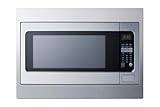
Overview: The Summit 27-Inch Built-In Microwave Oven provides substantial 2.2 cubic foot capacity in a sleek integrated design. This 1200-watt stainless steel unit includes a comprehensive trim kit for seamless installation in 27-inch cabinet openings, featuring digital controls and pre-programmed one-touch settings for common foods.
What Makes It Stand Out: The generous capacity accommodates large casserole dishes and family-sized portions, while the powerful 1200-watt operation ensures rapid, even heating. The complete installation kit—featuring bottom duct, rails, frame, and all hardware—eliminates guesswork and additional purchases, a significant advantage over competitors selling trim kits separately.
Value for Money: At $749.39, this microwave positions itself as a mid-range built-in option. The large capacity, high wattage, and included trim kit justify the price compared to premium brands charging significantly more for similar specs. It’s a solid value for homeowners wanting substantial cooking space without luxury-brand pricing.
Strengths and Weaknesses: Strengths include impressive 2.2 cu.ft capacity, strong 1200W power, comprehensive installation kit, one-touch convenience settings, and large glass turntable for even heating. The stainless steel front integrates well with modern kitchens. Weaknesses include the 27-inch width, which may not fit all cabinet configurations, lack of convection capability, and basic feature set compared to combination units. The brand lacks prestige.
Bottom Line: An excellent choice for families needing maximum microwave capacity in a built-in format. The Summit delivers on space and power while simplifying installation. If you require a large, reliable built-in microwave without combination features, this offers compelling value and performance.
10. SHARP SMD2470ASY Microwave Drawer Oven, 24-inch, 1.2 Cubic Feet, 950 Watt, Concealed Control Panel with Digital LCD Display, Stainless Steel

Overview: The Sharp SMD2470ASY Microwave Drawer Oven revolutionizes kitchen design with its innovative 24-inch drawer configuration. This 1.2 cubic foot, 950-watt appliance features an automatic drawer system that opens smoothly and closes hands-free, with a concealed control panel that tilts to a 45-degree angle for easy access.
What Makes It Stand Out: The drawer design eliminates awkward reaching and bending, placing food at an ergonomic height while saving valuable counter space. The concealed controls maintain a clean, minimalist aesthetic when not in use. The automatic opening and hands-free closing system is genuinely innovative, allowing operation with a gentle pull or touch—ideal when your hands are full.
Value for Money: At $1,299.99, this premium-priced microwave commands a significant investment. However, the unique drawer format solves layout challenges in islands, peninsulas, and accessible kitchen designs where traditional microwaves prove impractical. The engineering and convenience justify the cost for specific applications, though standard microwaves offer more capacity per dollar.
Strengths and Weaknesses: Strengths include unparalleled ergonomic access, space-saving design, premium build quality, hands-free operation, and Sharp’s reputable microwave technology. The concealed controls create a sleek appearance. Weaknesses include the high price, modest 950W power, limited 1.2 cu.ft capacity, and installation complexity requiring specific cabinet modifications. Repair costs may be higher due to specialized mechanism.
Bottom Line: Ideal for high-end kitchen renovations and accessible design projects. The Sharp Microwave Drawer excels in convenience and aesthetics but commands a premium. Choose this for its unique form factor and ergonomic benefits, not raw cooking power or value. It’s a luxury appliance that solves specific spatial challenges brilliantly.
Understanding Built-In Microwave Ovens for Wall Cabinets
What Defines a True Built-In Microwave?
A genuine built-in microwave differs from its countertop cousin in three critical ways: structural design, ventilation engineering, and trim integration. Unlike countertop models that simply slide into a cavity, true built-in units feature reinforced chassis that withstand mounting stresses and front-venting systems that prevent heat buildup in enclosed spaces. The internal components are typically oriented differently to accommodate zero-clearance installations, and the control panels are designed for eye-level operation. Watch out for manufacturers labeling countertop models as “built-in compatible”—this often just means a trim kit exists, not that the microwave is engineered for the demands of enclosed installation.
The Advantages of Wall Cabinet Integration
Mounting your microwave at eye level in a wall cabinet isn’t just about aesthetics; it’s a workflow revolution. You eliminate dangerous reaching over hot stoves, free up valuable countertop real estate, and create a more ergonomic cooking triangle. The visual impact is immediate—your kitchen gains a custom, streamlined appearance that buyers notice. From a resale perspective, proper built-in integration signals thoughtful renovation versus a slapdash countertop unit shoved into a hole. Plus, wall cabinet placement puts controls and viewing windows at a natural height, reducing neck strain and making it easier to monitor that delicate béchamel sauce.
Why the $500 Price Point Matters
What You Sacrifice (and Keep) at This Budget
Crossing into the sub-$500 territory means making strategic compromises, but not where you’d expect. You’ll typically lose premium materials like true commercial-grade stainless steel interiors and advanced inverter technology with ultra-precise power control. What you keep is surprising: most units still offer sensor cooking, adequate wattage for everyday tasks, and LED lighting that looks premium. The real trade-offs often hide in warranty length (dropping from 2-3 years to 1 year), trim kit quality (thinner metal, fewer finish options), and noise insulation (expect 5-10 decibels more hum). You won’t get chef-grade features like dual magnetrons or steam injection, but you’ll absolutely find models that handle popcorn, reheating, and defrosting with professional consistency.
Price vs. Performance: Finding the Sweet Spot
The $350-$500 range represents a fascinating inflection point where manufacturers either prioritize power or features—but rarely both. Units hovering around $400 often deliver higher wattage (1000-1100W) with fewer auto-cook presets, while $450-$500 models might sacrifice 100 watts of power for superior sensor algorithms and more robust trim kits. This is where understanding your cooking style becomes crucial. If you’re a meal-prep enthusiast who defrosts bulk meat weekly, prioritize power. If you’re a busy parent relying on one-touch popcorn and potato buttons, invest in smart features. The sweet spot exists where your primary use case aligns with the unit’s strengths, not where the spec sheet looks most impressive.
Critical Dimensions and Sizing Considerations
Standard Cabinet Sizes and Microwave Compatibility
Wall cabinets typically come in 24", 30", and 36" widths, but the interior opening is what matters. Most built-in microwaves require a 22 1/2" to 24" wide cutout, leaving room for trim kit flanges. The height standard is where things get tricky—many older cabinets were designed for 17" to 19" openings, while modern units often need 18" to 20 1/2". Depth is the silent killer of installations: standard cabinets are 12" deep, but microwaves need 15"-16" minimum, meaning you’ll likely need a deeper cabinet or a bump-out kit. Always measure the interior dimensions, not the door width, and account for any plumbing or electrical obstructions lurking behind the cabinet back.
The Importance of Trim Kits
Trim kits are the unsung heroes that transform a good installation into a great one, and they’re rarely included in the microwave’s base price. A quality kit does three things: provides structural support, ensures proper ventilation clearance, and delivers that custom, built-in aesthetic. The best kits include adjustable side panels to accommodate slightly irregular openings and feature venting channels that direct heat forward, not into your cabinetry. At the sub-$500 level, expect trim kits to cost $80-$150 and come in limited finishes—usually stainless steel, black, or white. Pro tip: order the trim kit from the same manufacturer as the microwave; third-party kits often lack precise venting specifications and can void your warranty.
Measuring Your Space: A Step-by-Step Guide
Grab a flashlight, a notepad, and a steel measuring tape—this isn’t a job for your phone’s ruler app. First, measure the cabinet opening width at three points: top, middle, and bottom. Use the narrowest measurement. Next, measure height at both sides and center. For depth, measure from the cabinet face frame to the back wall, but also check for any protruding nails, screws, or electrical boxes. Now, the critical step: measure the distance from the bottom of the upper cabinet to your countertop or range below. You need a minimum of 13"-15" clearance for safety and steam escape. Finally, open adjacent cabinet doors to ensure they won’t collide with the microwave handle. Document everything with photos; you’ll thank yourself when comparing specs online.
Power and Performance Metrics That Actually Matter
Wattage Explained: 700W vs 1100W+
Wattage isn’t just a number—it’s the difference between rubbery reheated pizza and a crisp, oven-fresh slice. At 700-800W, you’re in the dorm-room microwave territory: adequate for popcorn and hot cocoa but frustratingly slow for dense foods. The 900-1000W range hits the practical minimum for family use, handling frozen entrees and vegetable steaming competently. Cross into 1100W+ territory, and you gain real cooking power—meats defrost evenly, bacon crisps properly, and sensor cooking algorithms have enough thermal headroom to work accurately. Under $500, you’ll find most units clustered at 950-1000W, which is perfectly serviceable. Don’t be seduced by 1200W claims at this price; manufacturers often achieve that number through power cycling tricks that don’t translate to real-world performance gains.
Inverter Technology: Is It Worth It Under $500?
Inverter technology, which delivers continuous variable power instead of pulsing full power on and off, is the holy grail of microwave precision. It eliminates the “hot spots and cold spots” problem, especially crucial for delicate tasks like melting chocolate or softening butter. Here’s the reality check: true inverter microwaves under $500 are rare unicorns. Most “inverter” models in this range use simplified circuits that approximate the effect but don’t deliver the full benefits. If you find one, expect compromises elsewhere—smaller capacity, fewer features, or a noisier operation. For most users, a well-engineered 1000W non-inverter microwave with good sensor cooking will outperform a budget inverter model. Save the inverter obsession for when your budget crests $600.
Sensor Cooking Demystified
Sensor cooking sounds like marketing fluff until you understand the physics. A humidity sensor monitors moisture escaping from your food, automatically adjusting cook time and power. The key differentiator isn’t the sensor itself—most units have one—but the algorithm’s sophistication. Premium models use multi-stage sensing that accounts for food density and initial temperature. Budget units often rely on simpler “if-then” logic that works fine for popcorn and potatoes but stumbles on mixed dishes. When evaluating sensor features, look for the number of food-specific presets. A unit with 7-10 sensor programs (sensor reheat, sensor cook, frozen entrees, etc.) has more refined programming than one with just “sensor cook” and “popcorn.”
Essential Features to Prioritize
Auto-Cook Programs That Save Time
Not all auto-cook buttons are created equal. The magic lies in multi-stage programming that adjusts power mid-cycle. For example, a quality “baked potato” program might start at full power to heat through, then drop to 50% power to finish without turning the skin to leather. Under $500, prioritize programs you’ll actually use: frozen vegetables, rice, pizza reheat, and beverage warming. Skip models bloated with obscure settings like “quinoa” or “fish fillet” if they lack the basics. The best indicator of useful auto-cook programming is manual adjustability—can you add or subtract time mid-cycle without canceling the program? This flexibility suggests the manufacturer invested in intelligent software, not just button labels.
Defrosting Done Right: Power Levels and Precision
Defrosting is where cheap microwaves reveal their flaws, turning your expensive steak into a partially cooked mess. Look for units offering at least 5-10 power levels, with true 30% power capability (not just pulsed 100%). The defrost function should allow weight input in 0.1-pound increments and offer separate settings for meat, poultry, and seafood. Some sub-$500 gems include a “quick defrost” that uses higher initial power with frequent cycling to speed the process without cooking edges. Avoid microwaves that only defrost by time—you’ll be babysitting the process. The best budget compromise is a unit with weight-based defrost and a manual power level override, giving you control when the algorithm guesses wrong.
Turntable vs. Flatbed Designs
The turntable debate rages in microwave circles, but for built-in applications, the answer is surprisingly clear. Turntables ensure even heating by rotating food through standing wave patterns, but they reduce usable capacity and create spill-prone seams. Flatbed designs use rotating antennas or stirrer fans to distribute microwaves, offering a smooth, easy-clean surface. Under $500, most “flatbed” microwaves aren’t true commercial-style flatbeds—they’re countertop designs with the turntable motor removed. This often results in less even heating. Stick with traditional turntable models in this price range; the engineering is more mature, replacement parts are cheaper, and you’ll get better results. Just ensure the turntable is recessed into the cavity floor to maximize vertical space.
Installation Requirements and Challenges
Electrical Specifications You Can’t Ignore
Built-in microwaves demand dedicated 120V, 20-amp circuits—don’t even think about piggybacking onto your refrigerator line. The NEC code requires a grounded outlet within 3 feet of the installation point, and it must be accessible without removing the microwave. Check your electrical panel: if you’re running on a 15-amp circuit, you’re looking at a $200-$400 electrician visit to upgrade. Some budget-friendly models claim they work on 15-amp circuits, but they’ll trip breakers under heavy use. The power cord location matters too—top-exiting cords simplify installation in upper cabinets, while rear-exiting cords create clearance headaches. Pro move: take a photo of your electrical setup and show it to the appliance salesperson before finalizing your choice.
Ventilation: Recirculating vs. External
Your built-in microwave needs to breathe, and how it exhales determines your installation complexity. Recirculating units use charcoal filters to clean air and push it back into the kitchen—simple, but less effective for heavy cooking. External ventilation requires ductwork to the outside, dramatically improving air quality but adding $150-$300 in installation costs if ducts don’t exist. Most sub-$500 built-ins are recirculating-only or convertible with optional kits. The critical spec is CFM (cubic feet per minute) rating; anything under 300 CFM struggles with searing or frying. Check the filter access location—some designs require removing the entire microwave to change a $15 filter, a maddening design flaw that negates any cost savings.
DIY vs. Professional Installation: Cost Analysis
The allure of DIY installation is strong—until you’re holding a 55-pound microwave above your head while trying to align mounting brackets. Realistically, DIY is viable only if you’re comfortable with cabinet modifications, electrical work, and have a second set of hands. The hidden costs add up: heavy-duty toggle bolts ($15), a stud finder ($20), and potentially a cabinet bump-out kit ($40-$80). Professional installation runs $150-$250 but includes warranty protection, proper venting configuration, and liability insurance. Here’s the math: if your microwave costs $400 and the trim kit is $100, spending 40% more on professional installation protects your $500 investment. The exception? If you’re installing during a full cabinet replacement, your contractor can integrate the microwave for minimal additional cost.
Design and Aesthetic Considerations
Stainless Steel vs. Black Stainless vs. Panel-Ready
Finish choice impacts more than looks—it affects perceived kitchen value and maintenance headaches. True stainless steel (430 grade) offers durability and matches most appliances but shows fingerprints mercilessly. Black stainless, a PVD-coated finish, hides smudges better but can chip, revealing silver underneath; at under $500, the coating quality is suspect. Panel-ready models accept custom cabinet fronts for a truly integrated look, but you’ll spend $75-$150 on the panel plus installation time. For budget-conscious renovators, standard stainless with a smudge-proof coating offers the best compromise. Check the finish warranty—some brands cover cosmetic defects for only 30 days on budget models, a red flag for longevity.
Control Panel Placement and Ergonomics
Eye-level installation changes everything about control panel design. Buttons on the bottom of the door become awkward to read, while top-mounted panels can be obscured by cabinet frames. The sweet spot is a vertical panel on the door’s right side, positioned 48"-54" from the floor—comfortable for most users without requiring reading glasses. Touch controls look sleek but lack tactile feedback; hybrid designs with membrane buttons and LED indicators offer better usability. Avoid models with flat, glossy control surfaces directly under the cabinet bottom—they reflect cabinet grain, making labels hard to read. Test the viewing angle: can you see the display clearly from a slight side angle? If not, you’ll be doing the microwave lean every time you cook.
Handle Styles and Their Impact on Workflow
The humble handle affects both clearance and cleaning. Bar handles protrude 2"-3", potentially interfering with adjacent cabinet doors or appliance handles. Pocket handles, integrated into the door edge, maintain a sleek profile but can be awkward for users with limited grip strength. Some budget models use push-to-open mechanisms, eliminating handles entirely—a brilliant space-saver until the mechanism fails in year three. Consider your traffic flow: in galley kitchens, a low-profile handle prevents hip checks. For families with young children, a higher-mounted bar handle can be a safety feature, keeping tiny hands away. The handle’s metal finish should match your cabinet hardware within one shade; mismatched stainless tones scream “afterthought.”
Common Mistakes That Blow Your Budget
The Hidden Costs of Trim Kits
That $399 microwave can quickly become a $600 project when trim kit reality hits. Manufacturers often sell trim kits separately at premium prices, and generic alternatives rarely fit precisely. Some kits require additional mounting hardware not included in the base package. Worse, certain microwave models need specific kit versions—buying last year’s kit for this year’s model creates frustrating gaps. Always check kit availability before purchasing the microwave; discontinued kits can turn your bargain into a paperweight. Factor in finish matching costs too—if your appliances are brushed stainless but the kit only comes in polished, you’re looking at $50+ for custom finishing or living with mismatched metal.
Return Policy Pitfalls
Big-box retailers love advertising generous return policies until you try to return a built-in microwave with a scratched trim kit. Many classify built-in appliances as “installed products,” which fall under different return rules—often 48 hours and only if completely uninstalled. Open-box microwaves might be final sale, and missing even one mounting screw from the kit can trigger restocking fees. Online purchases add shipping costs; that “free shipping” rarely includes return freight, which can run $75-$100 for a 60-pound package. Before buying, photograph the unopened box and all components. Some retailers require original packaging in pristine condition for returns, and trust me, you won’t want to store that massive box “just in case.”
Warranty Limitations to Watch For
The one-year limited warranty is standard under $500, but the devil lives in the exclusions. Many warranties specifically deny coverage for “improper installation,” giving manufacturers an easy out if you DIY. Some require professional installation for warranty validation—read the fine print before you start drilling. Component coverage varies wildly; magnetrons might be covered for 5 years, but the control panel (most likely to fail) is only 1 year. Labor is almost never covered after the first 90 days. Extended warranties from retailers rarely pay off for microwaves under $500; the cost ($50-$80) approaches the price of just replacing the unit if it fails in year two. Instead, buy with a credit card that offers extended warranty protection—many add an extra year at no cost.
Maintenance and Longevity Tips
Cleaning Hacks for Built-In Units
Built-in microwaves are cleaning nightmares—spills hide under the turntable ring, and you can’t just haul the unit to the sink. The trick is preventative maintenance: line the bottom with a microwave-safe silicone mat that catches splatters and can be removed for washing. For stubborn stains, steam-clean with a bowl of water, lemon juice, and vinegar for 5 minutes; the condensation loosens everything. The door seal is critical—wipe it weekly with a damp cloth to prevent grease buildup that degrades the rubber. Never use abrasive cleaners on stainless finishes; a microfiber cloth with rubbing alcohol removes fingerprints and disinfects. Check the grease filters monthly; most are dishwasher-safe, but high heat can warp them, so use the top rack only.
When to Replace vs. Repair
The repair-or-replace math shifts dramatically under $500. If your magnetron fails after the warranty, a professional repair costs $150-$200—half the price of a new unit. Control panel failures run $100-$180, often not worth it when new models offer better features. However, simple fixes like a broken turntable motor ($20 part, 15-minute DIY) or door switch ($10 part) are absolutely worth repairing. The rule of thumb: if the repair estimate exceeds 40% of replacement cost and the unit is over 3 years old, replace it. Built-in microwaves have a typical lifespan of 7-10 years, but budget models often tap out at 5-7 years with heavy use. Watch for warning signs: unusual humming, door not sealing tightly, or cooking times suddenly increasing by 30% or more.
Energy Efficiency Secrets
That Energy Star label on microwaves is mostly marketing—there’s no federal standard for microwave efficiency. Real savings come from usage patterns. A 1000W microwave running for 10 minutes uses about 0.17 kWh, costing roughly 2 cents. The hidden energy hog is standby power; some models draw 3-5 watts continuously, adding $5-$8 annually to your bill. Look for units with actual power switches or eco modes that cut standby draw to under 1 watt. Cooking efficiency matters more: a 1100W unit that cooks 20% faster than a 900W model uses less total energy despite higher draw. Use microwave-safe covers to reduce cook times by 20-30%, and never run it empty—the magnetron can be damaged in seconds, turning your efficient appliance into an expensive paperweight.
Frequently Asked Questions
1. Can any countertop microwave be converted to built-in with a trim kit?
Not reliably. While many manufacturers sell trim kits for countertop models, these units lack the reinforced frames and front-venting systems designed for enclosed spaces. Using a non-built-in microwave can void warranties, cause overheating, and potentially create fire hazards. Always verify the model is specifically rated for built-in installation.
2. What’s the minimum cabinet depth for a built-in microwave?
Most built-in microwaves require a minimum cabinet depth of 15 inches, though 16-18 inches is ideal for proper ventilation clearance and cable management. Standard 12-inch deep wall cabinets will need a bump-out kit or custom modification. Measure from the front of the face frame to the back wall, accounting for any plumbing or electrical obstructions.
3. Do I need a dedicated circuit for a built-in microwave?
Yes, absolutely. NEC code requires a dedicated 120V, 20-amp circuit for built-in microwaves. Sharing a circuit with other appliances can cause breakers to trip and may void your warranty. If you’re replacing an existing built-in, verify the current circuit meets these specifications before installation.
4. How much ventilation space does a built-in microwave need?
Most manufacturers specify 1-3 inches of clearance on sides and top, with 1 inch minimum at the rear. However, true built-in models with front-venting systems can operate with zero side clearance. Always follow the specific model’s installation manual—insufficient ventilation is the number one cause of premature microwave failure.
5. Are trim kits universal between brands?
Never. Trim kits are proprietary and designed for specific microwave models or model families. Even within the same brand, a 2023 trim kit may not fit the 2024 microwave version. Always purchase the kit recommended by the manufacturer for your exact model number to ensure proper fit and ventilation.
6. What’s the average lifespan of a sub-$500 built-in microwave?
Expect 5-7 years of reliable service with normal household use. Heavy daily use may reduce this to 4-5 years. This is 2-3 years less than premium models, but the lower initial cost often makes replacement more economical than expensive repairs. Regular cleaning and proper ventilation can extend lifespan by 1-2 years.
7. Can I install a built-in microwave directly above a wall oven?
Generally no, unless specifically designed as a combination unit. Most built-in microwaves require a minimum 12-inch clearance above cooking surfaces, and wall ovens generate too much heat. The exception is certain microwave drawers or purpose-built double-oven configurations, which typically exceed the $500 budget significantly.
8. Is a rotating turntable necessary in a built-in microwave?
While not strictly necessary, turntables provide the most even heating in budget models. Flatbed designs require more sophisticated wave distribution systems that are rarely well-implemented under $500. A turntable model will deliver more consistent results and is easier to replace if damaged.
9. How do I clean the grease filters in a built-in microwave?
Most metal grease filters are dishwasher-safe on the top rack. Clean them monthly in heavy-use kitchens. Charcoal filters (for recirculating models) cannot be cleaned and must be replaced every 6-12 months. Never operate the microwave without filters installed, as grease buildup in the venting system can become a fire hazard.
10. Will a built-in microwave add value to my home?
A properly installed built-in microwave adds $200-$400 in perceived kitchen value, according to real estate studies. The key is seamless integration—gaps, mismatched trim, or obviously converted countertop units can detract value. In budget-conscious renovations, a clean built-in installation signals thoughtful design without the premium price tag of luxury appliances.