Finding the perfect microwave for your rental property feels like navigating a minefield of compromises. You need something durable enough to survive multiple tenants, affordable enough to protect your bottom line, and neutral enough to match any kitchen aesthetic—all while staying under that critical $250 price point. White finish microwaves have become the unspoken standard in rental kitchens for good reason: they hide wear better than stainless steel, blend seamlessly with existing appliances, and maintain their resale value when it’s time to upgrade your units.
But here’s what separates successful property managers from those constantly fielding maintenance calls: understanding that the cheapest option rarely saves money long-term. A sub-$100 microwave might seem like a win initially, but when it fails during a tenant’s lease—especially on a holiday weekend—you’re not just replacing an appliance; you’re managing frustration, potential lease violations, and emergency service fees. This guide dives deep into the strategic decisions that protect your investment while keeping tenants happy, all within that essential $250 budget ceiling.
Top 10 White Finish Microwave Ovens for Rental Kitchens
Detailed Product Reviews
1. FRIGIDAIRE EMW733-WHITE Microwave, 0.7 cu. ft, White

Overview: The FRIGIDAIRE EMW733-WHITE is a compact countertop microwave designed for space-constrained kitchens, dorm rooms, or offices. Measuring just 12.75 x 10 x 18 inches, this 0.7 cubic foot unit delivers 700 watts of power through 10 adjustable levels, offering basic functionality without overwhelming users with complex features.
What Makes It Stand Out: Its ultra-compact footprint is the defining characteristic, making it ideal for environments where every inch counts. The electronic touchpad interface remains straightforward with six one-touch functions for common tasks, while the child lock feature adds essential safety. The glass turntable ensures relatively even heating despite its smaller size.
Value for Money: At $79.99, this is the most budget-friendly option in our comparison. While the 700-watt output means longer cooking times compared to more powerful models, the price point is hard to beat for those prioritizing space and cost over speed. Comparable compact microwaves typically start at this price range but rarely offer the same brand recognition.
Strengths and Weaknesses:
- Pros: Extremely compact dimensions; affordable entry-level pricing; simple, intuitive controls; reliable brand; child safety lock
- Cons: Low wattage increases cooking time; limited 0.7 cu ft capacity; basic feature set; may struggle with larger plates
Bottom Line: Perfect for singles, students, or as a secondary microwave appliance. Accept the power trade-off for the substantial space savings and low price, but look elsewhere if you regularly cook for multiple people or need faster performance.
2. Nostalgia Retro 1000W Microwave Oven 1.1 Cu Ft Capacity – Child Safety Lock, 8 Auto-Cook Settings – Countertop Kitchen Appliance – White

Overview: The Nostalgia Retro microwave combines vintage aesthetics with modern 1000-watt performance in a 1.1 cubic foot package. This countertop appliance targets style-conscious consumers who refuse to sacrifice functionality for appearance, offering substantial cooking power in a design that stands out from generic white boxes that dominate the market.
What Makes It Stand Out: The retro design is immediately eye-catching and distinctive, but the unit backs up its looks with legitimate performance credentials. Eight auto-cook programs cover essential foods comprehensively, while express cooking provides instant one-touch heating for quick tasks. The rotating glass carousel ensures even heat distribution throughout dishes, and defrost-by-weight adds precision to frozen food preparation.
Value for Money: At $119.99, it commands a $40 premium over basic 700-watt models but delivers 30% more power and 57% more capacity. The style factor adds subjective value, while the feature set matches or exceeds competitors in the sub-$130 range. You’re paying modestly for both enhanced performance and distinctive design.
Strengths and Weaknesses:
- Pros: Attractive retro styling; powerful 1000-watt output; generous 1.1 cu ft capacity; multiple auto-cook options; express cooking convenience
- Cons: Aesthetic may not suit all kitchens; slightly higher price than utilitarian models; white finish shows stains and marks easily
Bottom Line: An excellent choice for apartment dwellers or homeowners wanting personality in their kitchen spaces. Delivers genuine performance beyond its stylish appearance, making it a practical fashion statement for modern homes.
3. Magic Chef Compact Countertop Microwave Oven, 1,000 Watts, White, 1.1 Cu. Ft. - Digital Kitchen Appliance with One-Touch Cooking, Child Lock, Timer, Reheat, Defrost, and 10 Power Levels

Overview: Magic Chef’s 1.1 cubic foot microwave delivers 1000 watts of power in a straightforward, no-nonsense package built for longevity. This model emphasizes practical functionality over flashy design, featuring an LED display and electronic controls that prioritize ease of use for daily reheating and cooking tasks in busy households.
What Makes It Stand Out: The brand’s nine-decade heritage in affordable appliances shines through in thoughtful details: specific auto-cook settings for popcorn, pizza, and frozen vegetables eliminate guesswork. The 30-second express cooking function and ten power levels provide flexibility, while the rotating glass turntable ensures consistent results. The LED display offers better visibility than traditional screens in low-light conditions.
Value for Money: Priced at $134.99, it sits $15 above the Nostalgia model with similar core specs. The premium buys you enhanced program specificity and Magic Chef’s established reliability track record. For those valuing brand trust over aesthetic flair, the modest upcharge is justified for long-term peace of mind and consistent performance throughout years of service.
Strengths and Weaknesses:
- Pros: Trusted brand reputation; specific food presets; clear LED display; even cooking performance; comprehensive safety lock
- Cons: Plain utilitarian design; slightly higher cost than competitors; white exterior shows fingerprints easily; limited advanced features
Bottom Line: A dependable workhorse for families or individuals wanting proven reliability. The intuitive controls and tailored presets make it a practical choice for everyday use without paying for unnecessary frills or decorative elements.
4. GE JVM3160DFWW 1.6 Cu. Ft. Over-the-Range Microwave Oven White Bundle with Premium 2 YR CPS Enhanced Protection Pack

Overview: The GE JVM3160DFWW transitions from countertop to over-the-range installation, offering 1.6 cubic feet of generous capacity in a space-saving configuration. This bundle includes a two-year extended protection plan, targeting buyers undertaking kitchen renovations or seeking integrated, built-in appliance solutions for modern kitchens.
What Makes It Stand Out: As the only over-the-range model reviewed, it fundamentally differs from countertop units by freeing up valuable counter space. Over-the-range microwaves typically provide ventilation and cooktop lighting functions. The 1.6 cu ft capacity handles larger dishes and family-sized portions with ease, and the included protection pack adds peace of mind for this premium purchase.
Value for Money: At $284.00, it’s more than double the price of countertop alternatives, but over-the-range models inherently cost more due to installation complexity and dual functionality. The bundled protection plan (typically $40-60 when purchased separately) adds tangible value and financial security. Comparable GE OTR models start at $250, making this competitively priced for the category.
Strengths and Weaknesses:
- Pros: Saves valuable counter space; larger 1.6 cu ft capacity; integrated ventilation capabilities; trusted GE engineering; included extended warranty protection
- Cons: Requires installation and possible electrical work; highest price point; not portable; may need professional mounting assistance
Bottom Line: Ideal for kitchen remodels or replacing existing OTR units. Don’t buy this for simple countertop needs, but it’s a smart investment for permanent, space-efficient installation with reliable brand backing and long-term warranty coverage.
5. Magic Chef MC99MW 0.9-Cu. Ft. 900-Watt Digital Touch Countertop Microwave (White)
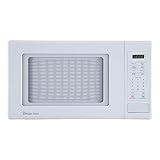
Overview: The Magic Chef MC99MW occupies a middle ground between compact and full-size microwaves, offering 0.9 cubic feet of capacity powered by 900 watts. This digital model targets users seeking better performance than entry-level units without committing to larger 1.1+ cubic foot footprints that dominate counter space.
What Makes It Stand Out: The 900-watt output hits a sweet spot—noticeably faster than 700-watt models while remaining energy-efficient and cost-effective to operate. Six preprogrammed modes cover everyday items comprehensively, and the express cooking function provides instant activation. The digital touch controls offer modern convenience in a modestly sized package that fits most standard dinner plates comfortably.
Value for Money: At $115.00, it competes directly with the Nostalgia model but trades retro style for a middle-ground wattage. You get $5 savings versus the 1000-watt Magic Chef, but sacrifice some capacity and power. For many practical users, 900 watts and 0.9 cu ft represent the optimal practical balance for everyday cooking needs.
Strengths and Weaknesses:
- Pros: Efficient 900-watt output; space-efficient 0.9 cu ft size; modern digital controls; convenient express cooking; trusted brand reliability
- Cons: Smaller capacity than 1.1 cu ft models; fewer auto programs than premium options; basic aesthetic appearance
Bottom Line: A sensible compromise choice for couples or small families. Delivers adequate power and space for daily needs while keeping costs reasonable and conserving valuable kitchen real estate effectively.
6. Farberware 1.1 Cu. Ft. Countertop Microwave Oven – 1000 Watts Power, Auto Cook Settings, Defrost, Easy Clean and Child Safety Lock - Metallic Red

Overview: The Farberware 1.1 cubic foot microwave delivers 1000 watts of cooking power in a striking metallic red finish that elevates kitchen aesthetics. This countertop model balances compact dimensions with full-sized functionality, making it ideal for apartments, offices, or homes where space is at a premium. The unit features a comprehensive control panel with LED display, kitchen timer, and clock functionality.
What Makes It Stand Out: Beyond its eye-catching metallic red cabinet, this microwave offers ten power levels with multi-stage cooking capabilities and six one-touch presets for popular items like popcorn, pizza, and potatoes. The child safety lock provides peace of mind for families, while the easy-clean interior simplifies maintenance. The 1.1 cubic foot capacity proves surprisingly versatile for daily cooking tasks.
Value for Money: At $139.98, you’re paying approximately $27 more than the stainless steel variant for purely aesthetic reasons. While the premium finish commands a higher price, the feature set remains identical—making this a value proposition for those prioritizing style. For design-conscious buyers, the unique color justifies the uptick, though budget shoppers may prefer the standard model.
Strengths and Weaknesses: Strengths include the distinctive metallic red finish, powerful 1000-watt output, compact footprint, intuitive controls, and comprehensive safety features. The six auto-cook settings cover most common needs. Weaknesses center on the price premium over functionally identical models, limited color compatibility with some kitchen décors, and the 1.1 cubic foot capacity which may prove insufficient for larger families or casserole dishes.
Bottom Line: This microwave suits style-savvy users who refuse to compromise on performance. If your kitchen needs a pop of color and you value the robust feature set, the metallic red Farberware delivers. For those indifferent to aesthetics, the stainless version offers better value.
7. Farberware 1.1 Cu. Ft. Countertop Microwave Oven – 1000 Watts Power, Auto Cook Settings, Defrost, Easy Clean and Child Safety Lock - Stainless

Overview: The Farberware 1.1 cubic foot stainless steel microwave packs 1000 watts of power into a space-saving countertop design. This versatile appliance handles everything from quick reheating to full meal preparation with its comprehensive feature set. The neutral stainless finish integrates seamlessly into any kitchen aesthetic, making it a practical choice for diverse environments.
What Makes It Stand Out: This model offers identical functionality to its colorful counterpart but at a more accessible price point. Ten power levels combine with multi-stage cooking and six one-touch presets for effortless operation. The defrost function works by weight or time, while the child safety lock ensures family-friendly operation. The easy-clean interior and exterior reduce maintenance time.
Value for Money: At $112.50, this microwave represents exceptional value. You receive the same powerful 1000-watt cooking performance, 1.1 cubic foot capacity, and advanced features as premium models costing significantly more. The stainless finish provides a classic look without the aesthetic markup, making this arguably the smartest purchase in the Farberware lineup for budget-conscious shoppers.
Strengths and Weaknesses: Major strengths include the competitive price point, robust 1000-watt power output, compact yet functional size, versatile preset options, and reliable child lock mechanism. The stainless exterior offers broad appeal. Weaknesses include the fingerprint-prone stainless surface, the modest 1.1 cubic foot capacity that may not suit large households, and basic design that lacks visual distinction. Some users might prefer more advanced sensor cooking.
Bottom Line: This is the pragmatic choice for buyers seeking performance over pizzazz. The Farberware stainless microwave delivers reliable, powerful cooking in a compact package at a price that’s hard to beat. Perfect for small families, office kitchens, or anyone wanting quality without paying for unnecessary frills.
8. Commercial CHEF CHM990W 900 Watt Counter Top Microwave Oven, 0.9 Cubic Feet, White Cabinet

Overview: The Commercial CHEF CHM990W offers essential microwave functionality in a compact white cabinet design. With 900 watts of power and 0.9 cubic feet capacity, this countertop unit targets budget-conscious consumers needing reliable performance for basic tasks. Its straightforward digital controls and LED display make operation simple for users of all skill levels.
What Makes It Stand Out: This microwave’s primary distinction is its remarkable affordability without sacrificing core functionality. Ten power levels provide cooking flexibility, while preset menus handle common items. The push-button door mechanism and interior turntable ensure even heating. At under $90, it includes features like a kitchen timer and safety door lock typically found on pricier models.
Value for Money: At $87.81, this represents one of the best entry-level values available. While lower wattage and capacity limit its versatility compared to premium models, the price-to-performance ratio excels for dorm rooms, offices, or temporary living situations. You’re getting reliable reheating and basic cooking capabilities at a fraction of the cost of feature-rich alternatives.
Strengths and Weaknesses: Strengths include the ultra-affordable price, compact footprint suitable for tight spaces, simple intuitive controls, and adequate 900-watt power for most reheating tasks. The white finish resists fingerprints. Weaknesses are the smaller 0.9 cubic foot capacity, lower power extending cooking times, basic feature set lacking sensor cooking, and plastic construction that feels less durable. The white cabinet may discolor over time.
Bottom Line: The Commercial CHEF microwave serves those prioritizing price above all else. It’s perfect for students, office break rooms, or as a secondary unit. Don’t expect advanced features or rapid cooking, but for basic reheating and simple meals, it delivers dependable performance that justifies every penny of its modest price tag.
9. FRIGIDAIRE EMW788RETRO 0.7 cu. ft. Retro Microwave, White-RoseGold

Overview: The Frigidaire Retro Microwave embraces vintage aesthetics with its distinctive white and rose gold design, oversized knob control, and 0.7 cubic foot compact form. Delivering 700 watts of power, this appliance prioritizes style over raw performance, appealing to design enthusiasts and those furnishing small spaces with character. The retro-themed interface simplifies operation.
What Makes It Stand Out: This microwave’s unapologetic retro styling sets it apart in a sea of generic black and stainless boxes. The oversized knob provides tactile control reminiscent of classic appliances, while the white-rose gold color scheme creates a focal point. Despite its compact size, it includes practical features like speed/weight defrost and a child safety lock, blending old-school charm with modern safety.
Value for Money: At $79.99, you’re investing primarily in design rather than capacity or power. The 700-watt output and 0.7 cubic foot interior limit cooking versatility, making this best suited for singles, dorm residents, or office use. The price reflects the styling premium, though comparable performance can be found cheaper in utilitarian models. It’s a decorative appliance that cooks.
Strengths and Weaknesses: Strengths include the eye-catching retro design, compact footprint, simple manual controls, child safety lock, and affordable price point. The aesthetic makes it a conversation piece. Weaknesses are significant: the underpowered 700-watt engine, tiny 0.7 cubic foot capacity that barely fits a dinner plate, lack of advanced features, and limited functionality for families. Cooking times are noticeably longer.
Bottom Line: Purchase the Frigidaire Retro for its looks, not its cooking prowess. It’s ideal for design-conscious individuals with minimal microwave needs—think reheating coffee or single servings. For actual meal preparation, look elsewhere. This is a statement piece that happens to microwave, perfect for studios, dorm rooms, or offices where style matters as much as function.
10. TOSHIBA ML-EM45PIT(SS) Countertop Microwave Oven with Inverter Technology, Kitchen Essentials, Smart Sensor, Auto Defrost, 1.6 Cu.ft, 13.6" Removable Turntable, 33lb.&1250W, Stainless Steel

Overview: The Toshiba ML-EM45PIT(SS) represents the premium tier of countertop microwaves, featuring advanced inverter technology and smart sensor cooking in a spacious 1.6 cubic foot stainless steel package. With 1250 watts of power, this model targets serious home cooks seeking restaurant-quality results. The 13.6-inch turntable accommodates large dishes and 12-inch pizzas.
What Makes It Stand Out: Inverter technology distinguishes this Toshiba, delivering consistent power for even heating and defrosting without cold spots. The smart sensor automatically adjusts cooking time and power based on food moisture levels. Six pre-programmed sensor menus optimize popular foods, while the quick-start button enables instant 1-3 minute cooking. The sound on/off function adds welcome customization.
Value for Money: At $212.99, this microwave commands a premium but justifies it through superior technology and capacity. Inverter models typically cost more than conventional units, and the 1.6 cubic foot size suits families. Compared to basic 1000-watt models, the enhanced performance and larger interior represent meaningful upgrades for frequent cooks who value precision and speed.
Strengths and Weaknesses: Strengths include the powerful 1250-watt inverter technology, large 1.6 cubic foot capacity, intelligent sensor cooking, sleek stainless design, adjustable sound settings, and spacious turntable. Cooking is faster and more even. Weaknesses include the higher price point, larger footprint requiring substantial counter space, and control panel without backlighting. The advanced features may overwhelm simple-reheat users.
Bottom Line: This Toshiba is worth the investment for cooking enthusiasts and families who use their microwave daily. The inverter technology and smart sensor deliver tangible improvements in food quality and cooking precision. While overkill for basic reheating, those who steam vegetables, defrost meats, and prepare full meals will appreciate the superior performance and generous capacity.
Why White Microwaves Dominate Rental Kitchen Design
The Psychology of White Appliances in Rental Spaces
White appliances create a psychological impression of cleanliness and spaciousness that directly impacts tenant satisfaction. Unlike trendy colors or finishes that polarize prospects, white serves as a blank canvas that allows potential renters to envision their own belongings in the space. This neutrality translates to shorter vacancy periods and broader appeal across demographic segments, from college students to young families. Property managers consistently report that white-finish kitchens photograph better for listings and show more consistently during tours, making them a marketing asset rather than just a functional necessity.
Matching Existing Décor Without the Hassle
The practical reality of rental property management is that you’re rarely starting with a blank slate. Most rental kitchens feature mixed-era appliances—perhaps a white refrigerator from 2015 and a dishwasher replaced in 2020. A white microwave creates cohesion without requiring a full appliance suite upgrade. This finish also masks minor scratches and fingerprints far better than stainless steel, which shows every smudge and requires special cleaners. For properties with older white appliances, the “white” standard remains remarkably consistent across manufacturers, ensuring your new purchase won’t create a mismatched eyesore.
Understanding the $250 Price Sweet Spot for Rental Properties
Balancing Cost, Quality, and Tenant Expectations
The $250 threshold represents a critical inflection point where manufacturer quality dramatically improves without entering premium residential territory. Below $150, you’re typically looking at residential-grade components with 1-2 year lifespans under rental conditions. Between $150-$250, you access commercial-inspired features like reinforced door latches, thicker gauge power cords, and more robust magnetrons—the core heating component. This price range also triggers better warranty coverage, often jumping from 90-day limited warranties to 1-year full coverage with 5-year magnetron protection, directly impacting your long-term ROI.
Long-Term ROI vs. Upfront Savings
Consider this calculation: a $75 microwave that fails every 18 months costs you $125 in labor for three replacement cycles over five years, totaling $350 plus your time. A $200 microwave lasting five years costs $200 with one $40 installation, totaling $240. The “expensive” option saves 31% over time. Factor in tenant goodwill and avoided emergency calls, and the financial case becomes overwhelming. This price bracket also positions you above the absolute bottom tier, signaling to quality tenants that you invest in their living experience—a subtle but powerful retention tool.
Countertop vs. Over-the-Range: Making the Right Choice
Space Optimization in Compact Kitchens
Countertop models offer unmatched flexibility for studio and one-bedroom units where kitchen real estate is premium. They allow tenants to relocate the appliance based on their cooking habits and can be easily replaced without disturbing cabinetry. However, they consume 2-3 square feet of counter space that could otherwise command higher rent in micro-apartments. Over-the-range (OTR) microwaves solve this spatial equation by combining ventilation and cooking functions, effectively paying rent for their footprint. For properties with existing range hoods, OTR units eliminate a redundant appliance while creating a built-in look that justifies rent premiums.
Installation Complexity and Maintenance Access
Countertop microwaves win on installation simplicity—plug-and-play operation means zero labor costs and immediate tenant use. OTR units require dedicated 120V circuits, proper venting (either ducted or recirculating), and precise mounting that typically needs a licensed handyman. This $150-$300 installation cost must be amortized across the appliance’s lifespan. However, OTR microwaves are less likely to suffer tenant damage from moving or improper cleaning, and their fixed position reduces theft concerns in furnished or corporate rentals. Maintenance access differs significantly: countertop models can be serviced in-unit or swapped instantly, while OTR repairs may require dismounting, creating longer resolution times.
Size Matters: Capacity Guidelines for Rental Units
Studio vs. Multi-Bedroom Property Considerations
Microwave capacity, measured in cubic feet, directly correlates with tenant usage patterns and complaint frequency. For studios and one-bedrooms, 0.9 to 1.1 cubic feet hits the sweet spot—large enough for single-serving meals and standard dinner plates, but small enough to discourage hoarding of oversized cookware. Two and three-bedroom units serving families or roommates demand 1.2 to 1.6 cubic feet to accommodate larger dishes, shared meals, and diverse cooking needs. Undersized microwaves generate disproportionate tenant complaints, while oversized units waste energy and counter space on demographics that don’t require them.
External Dimensions That Actually Fit
Before purchasing, create a template of the microwave’s footprint using cardboard or paper. For countertop models, verify there’s at least 3 inches of clearance on sides and top for ventilation, and that the door swing doesn’t block cabinets or create traffic flow issues. For OTR installations, measure the space between cabinets precisely—most require 30 inches, but older properties may have 24 or 27-inch gaps. Check the depth: protruding microwaves create head-bump hazards and visual clutter. The height from cooktop to bottom of microwave must maintain 18-20 inches clearance per most building codes, impacting shorter tenants or properties with raised counters.
Power Levels That Tenants Actually Need
Wattage Sweet Spots for Common Rental Scenarios
700-watt microwaves, while energy-sippers, frustrate tenants with 3-4 minute frozen dinner cook times and uneven heating. They generate complaints that masquerade as appliance failures. 900-1000 watts represents the rental property gold standard—fast enough for modern convenience expectations (2-2.5 minutes for standard meals) while remaining compatible with most residential electrical circuits. 1100+ watt units enter premium territory that tenants appreciate but aren’t necessary for basic rental obligations. Critically, higher wattage doesn’t linearly increase energy costs because reduced cook times offset higher draw, often resulting in similar or lower per-use consumption.
Energy Consumption and Utility Cost Implications
A 1000-watt microwave used 15 minutes daily consumes roughly 91 kWh annually, costing $11-14 depending on local rates. A 700-watt unit used for the same tasks might run 22 minutes daily, consuming 94 kWh due to longer operation. The real energy variable isn’t wattage but usage patterns. Units with sensor cooking reduce energy waste by preventing overcooking, while LED displays consume negligible power ($2-3/year). For properties where landlords pay utilities, these efficiencies compound across multiple units. For tenant-paid situations, energy-efficient models become a marketing point that justifies rent premiums in eco-conscious markets.
Essential Features That Reduce Maintenance Calls
Auto-Cook Settings and Sensor Technology
Microwaves with 6-10 auto-cook presets (popcorn, potato, pizza, beverage, frozen entrée, reheat) dramatically reduce tenant error. When a tenant can press one button instead of guessing time and power, you eliminate the number one cause of microwave damage: running empty or severely overcooking food. Sensor technology that detects humidity and adjusts cooking time automatically prevents the burnt popcorn incidents that leave permanent odors and damaged interiors. These features cost manufacturers $8-12 to implement but add $40-60 to retail price—a worthwhile investment that pays dividends in reduced service calls and extended appliance life.
Easy-Clean Interiors and Removable Components
Look for ceramic enamel or epoxy interiors rather than painted surfaces. These materials withstand tenant cleaning attempts with abrasive sponges and resist staining from tomato sauce explosions—a common rental kitchen reality. Removable turntables and roller rings that are dishwasher-safe encourage proper cleaning and allow for easy replacement when broken ($8-15 parts vs. $150+ for a new unit). Control panels with membrane buttons rather than tactile push-buttons prevent liquid infiltration and are easier to sanitize. Some models feature “steam clean” cycles that loosen grime with minimal effort, a tenant-friendly innovation that keeps units presentable during showings.
Durability Features That Pay for Themselves
Commercial-Grade Components on a Budget
Within the $250 ceiling, certain commercial-inspired features signal durability: metal control panels instead of plastic, stainless steel interior cavities (not just faces), and heavy-duty door hinges tested to 50,000+ cycles. The magnetron warranty length serves as a quality proxy—5-year coverage indicates manufacturer confidence in core components. Door latches should feel substantial; wobbly doors foreshadow alignment issues that prevent operation. Weight matters: a 30+ pound countertop microwave typically uses thicker gauge steel and heavier transformers than a 20-pound counterpart. These specifications rarely appear on consumer-facing packaging but are worth researching in product manuals or technical specs.
Warranty Coverage That Protects Your Investment
The warranty structure reveals the manufacturer’s target market. 90-day warranties scream “dorm room” durability, while 1-year full coverage with extended magnetron protection indicates rental-grade confidence. Some brands offer landlord-specific warranty programs with expedited service and no-questions-asked replacements for tenant-caused damage—worth the slight premium. Understand warranty transferability; some become void when the appliance changes hands or moves locations. For portfolios with multiple properties, investigate manufacturer volume discount programs that include enhanced warranty terms. Document serial numbers and purchase dates in property management software to streamline claims; a 15-minute administrative task can save hours when coordinating repairs across units.
Safety Certifications and Code Compliance
UL Listing and What It Means for Landlords
Underwriters Laboratories (UL) certification isn’t just a sticker—it’s your liability shield. UL-listed microwaves have undergone rigorous testing for electrical safety, fire resistance, and structural integrity. In the event of an appliance-related incident, insurance claims can be denied if the unit lacked proper certification. For OTR installations, additional certifications like ANSI Z21.1 for gas range compatibility become critical. Some jurisdictions require AHAM (Association of Home Appliance Manufacturers) certification for rental properties, verifying the unit meets published performance standards. Always verify certification numbers on the UL website; counterfeit listings exist in the budget appliance market, and using them knowingly can void property insurance.
Tenant Safety Features That Minimize Liability
Look for child lock functions even in adult-only buildings—prevents accidental activation during cleaning and protects visiting children. Automatic shutoff sensors that kill power when overheating is detected prevent the number one cause of microwave fires: running empty. For OTR units, heat sensors that automatically activate the exhaust fan when range temperatures spike protect cabinetry and reduce fire risk. Some models include tip-over protection for countertop units, a crucial feature if tenants might place them on elevated surfaces or in earthquake-prone regions. Document these safety features in your tenant welcome packet; it demonstrates due diligence and can reduce negligence claims.
Energy Efficiency Ratings That Impact Your Bottom Line
Understanding EPEAT and Energy Star for Microwaves
While Energy Star doesn’t currently certify microwaves due to their intermittent use patterns, EPEAT (Electronic Product Environmental Assessment Tool) ratings fill this gap. EPEAT-registered microwaves meet strict criteria for energy efficiency, materials selection, and end-of-life recyclability. A bronze-rated unit uses 15% less standby power than non-rated competitors; silver and gold ratings improve further. For a 50-unit portfolio, this translates to $400-600 in annual utility savings if you pay common area electric or include utilities in rent. The registration also indicates RoHS compliance—restriction of hazardous substances—protecting you from future regulatory changes that might require premature appliance replacement.
Calculating Annual Operating Costs
Beyond the purchase price, calculate the true cost of ownership: (Wattage × Daily Use Minutes ÷ 60) × 365 days × kWh rate ÷ 1000. For a 1000-watt unit used 20 minutes daily at $0.13/kWh, that’s $15.83/year. Add $2 for standby power with LED display. Multiply by expected lifespan (5 years = $89). Compare this to a cheaper 700-watt unit that might last 2 years ($32 operating + $75 replacement = $107 over 2 years, or $267 over 5 years with 2.5 replacements). The “expensive” efficient model saves 33% over five years while providing better tenant experience. This math becomes powerful when justifying budget requests to property owners.
The Hidden Costs of Cheap Microwaves
Replacement Frequency and Labor Costs
That $60 microwave seems like a steal until you factor in the $80 handyman fee to swap it out, the $25 trip to the property, and the two hours of your time coordinating access. At two replacements in three years, you’ve spent $330 vs. $220 for a quality unit installed once. Cheap microwaves also fail in ways that inconvenience tenants most: door latches that break mid-lease, creating a habitability issue; turntable motors that grind loudly, generating noise complaints; control panels that delaminate, looking filthy despite cleaning. Each failure chips away at tenant satisfaction and your reputation as a responsive manager.
Tenant Complaints and Turnover Implications
In tenant satisfaction surveys, appliance reliability consistently ranks in the top five factors influencing renewal decisions. A microwave that fails repeatedly signals broader property neglect, even if unrelated. Consider the lifetime value of a good tenant: a $1200/month unit with 3-year retention generates $43,200 in revenue. Losing them over a $150 appliance dispute costs 288 times the “savings” from buying cheap. Forward-thinking managers budget $200-250 per appliance specifically to avoid this mismatch. They also include microwave performance in move-in checklists, setting expectations and documenting baseline condition to prevent “it never worked” disputes.
Installation Best Practices for Property Managers
Electrical Requirements and Outlet Placement
Microwaves require dedicated 120V, 15-amp circuits in most jurisdictions—sharing with kitchen outlets can trip breakers when tenants run toasters simultaneously. For OTR installations, verify the circuit isn’t shared with lighting or small appliance branches. Outlet placement matters: position it so the plug doesn’t extend beyond the microwave’s footprint, preventing accidental unplugging and creating a cleaner look. Use tamper-resistant outlets in family units; they’re code in many areas and prevent children from inserting objects. For countertop models, install the outlet 12-18 inches above counter height to keep the cord from dangling into food preparation areas, a subtle hygiene improvement tenants notice.
Ventilation Considerations for Longevity
Countertop microwaves need 3 inches of clearance on top and sides, plus 1 inch in back. Blocking vents with bread boxes or cutting boards is the number two cause of premature failure (after running empty). Consider installing a small shelf above the microwave with 4-inch clearance, creating a visual barrier that prevents tenants from stacking items on top. For OTR units, decide between ducted (exterior venting) and recirculating (filtered) systems. Ducted is superior for moisture and odor control but requires exterior wall access and adds $200-400 installation cost. Recirculating works for interior kitchens but demands filter changes every 6 months—task this to your turnover cleaning crew to ensure compliance.
Maintenance Strategies to Extend Appliance Lifespan
Preventive Cleaning Schedules
Train your turnover crew to perform microwave deep cleans using a steam-and-vinegar method: microwave a bowl of water with 2 tablespoons of vinegar for 5 minutes, let steam for 3 more, then wipe down. This loosens even baked-on tenant messes without harsh chemicals that damage interiors. Replace charcoal filters in recirculating OTR units during every turnover, regardless of apparent condition—$8 filters prevent $200 odor complaints. Document cleaning with timestamped photos in your property management system; when a tenant claims “it was disgusting at move-in,” you have evidence. Schedule professional deep cleaning annually for long-term tenants, treating it as preventive maintenance that costs $25 but extends appliance life by 2-3 years.
Quick Troubleshooting for Common Issues
Empower tenants with a simple troubleshooting card: “If microwave won’t start, check door is fully closed and plug is secure. If plate won’t rotate, remove and realign. If sparking, stop immediately and call management.” This resolves 60% of “emergency” calls that are actually user error. For property managers, learn to test the door interlock switches with a multimeter—a $15 tool that diagnoses the most common failure in 2 minutes. Keep spare turntable motors ($12) and door latches ($8) in your maintenance closet; these parts swap with basic screwdriver skills and prevent full replacements. Document each repair in a unit-specific log to identify patterns—if Unit 3B has had three motor failures, the tenant may be abusing the appliance, warranting a lease conversation.
When to Replace vs. Repair in Rental Units
The 50% Rule for Appliance Decisions
Industry standard dictates: if repair costs exceed 50% of replacement cost, replace. But for rentals, add a time variable: if the unit is over 3 years old and repair exceeds 30% of replacement, replace. This accounts for accelerated wear in rental environments and prevents cascade failures where you fix the turntable motor only to have the magnetron fail two months later. Also evaluate tenant circumstances: if they’re mid-lease and reliable, a quick $40 repair maintains goodwill. If they’re moving out in 30 days, replacement during turnover is more efficient. Keep failed units for parts; a dead microwave might donate its door latch or control panel to save another unit.
Timing Replacements with Tenant Turnover
The optimal replacement window is during the 3-day turnover period between tenants. This eliminates access scheduling, allows for installation verification, and lets you market the “brand new microwave” in listing photos. For long-term tenants, schedule replacements during lease renewal negotiations—offering a new appliance can justify a $15-25 monthly rent increase, paying for itself in 10-16 months while improving retention. Avoid mid-lease replacements unless the unit is completely non-functional; partial failures (like noisy operation) can often wait until natural turnover, preserving capital. Document appliance age in your property management software and set 4-year replacement reminders to proactively budget and schedule.
Seasonal Buying Strategies for Maximum Savings
Best Times to Purchase for Property-Wide Upgrades
Microwave manufacturers release new models in September-October, making August the prime clearance month for previous-year units with identical internals. Black Friday deals often hit the $250 price point for $300+ MSRP models, perfect for portfolio-wide upgrades. For single-unit replacements, watch for Memorial Day and Labor Day sales when appliance retailers discount 15-20% to drive traffic. Avoid January-February when post-holiday inventory is low and prices peak. For portfolios, negotiate directly with appliance wholesalers in Q4—they’re motivated to hit annual volume targets and may offer 10-15% discounts plus extended warranties on orders of 10+ units. This bulk buying can drop a $250 microwave to $212, freeing budget for professional installation.
Frequently Asked Questions
How long should a rental microwave last before replacement?
In rental environments, expect 4-5 years from a quality $200-250 microwave versus 18-24 months from a sub-$100 unit. The key is tenant turnover; each move-in/move-out cycle adds stress equivalent to 6 months of normal use. Track lifespan by unit, not just purchase date, to optimize replacement timing.
Is it worth buying extended warranties for rental property microwaves?
Standard manufacturer warranties (1-year full, 5-year magnetron) typically suffice. Third-party extended warranties often exclude “commercial use,” which rental properties can be classified as. Instead, budget $40/year per unit into a capital replacement fund. This self-insurance approach covers any appliance and earns interest while you wait.
What should I do if a tenant damages the microwave?
Document damage with photos immediately upon discovery. For damage beyond normal wear (burnt interiors, cracked doors, missing parts), you can deduct repair/replacement costs from the security deposit per most lease agreements. Provide tenants with a microwave care sheet at move-in to establish expectations and reduce disputes.
Can I install an over-the-range microwave myself to save money?
OTR installation requires electrical work and proper venting that often mandates a licensed professional per local codes. Improper installation creates fire hazards and liability exposure. Budget $150-250 for professional installation; it’s insurance against $10,000+ in damage claims and ensures warranty validity.
What wattage microwave is best for college rental properties?
Aim for 900-1000 watts even for student housing. Lower wattages lead to longer cook times and frustration, increasing the likelihood tenants will circumvent rules with prohibited hot plates or toaster ovens, creating greater fire risks. The marginal energy savings aren’t worth the tenant satisfaction trade-off.
Should I provide a microwave if the kitchen has no dedicated space?
Yes, but choose a compact 0.7-0.9 cubic foot countertop model that can be easily stored when not in use. Specify in the lease that the microwave is provided as a courtesy and tenant assumes responsibility for safe storage and use. This prevents the “appliance required” argument while offering competitive amenity value.
How do I handle microwave repairs during an active lease?
For complete failure, replace within 24-48 hours as it’s considered an essential appliance in most jurisdictions. For partial failures (noisy operation, uneven heating), schedule repair within 5-7 days. Provide a temporary replacement if repair exceeds 3 days. Document all communications and actions to show good-faith response to maintenance requests.
Are smart microwaves with Wi-Fi worth it for rentals?
Smart features add cost and complexity without rental-specific benefits. Tenants won’t use app controls, and connectivity issues generate support calls. The $30-50 premium over standard models is better spent on durability features like stainless steel interiors or extended magnetron warranties. Skip the smart features unless marketing ultra-luxury units.
What’s the most effective way to clean a rental microwave between tenants?
Use the steam-clean method: microwave a bowl of water with lemon juice or vinegar for 5 minutes, let steam for 5 more, then wipe. For stubborn stains, make a paste of baking soda and water, let sit 10 minutes, then scrub gently. Never use steel wool or harsh chemicals—they damage protective coatings and void warranties.
Can I deduct microwave cleaning fees from security deposits?
Only if the microwave is left in a condition requiring professional cleaning beyond normal wear. Burnt-on food, excessive grease, or damage from improper cleaning (like scratched interiors from abrasive pads) qualifies. Document with move-in and move-out photos. Standard cleaning should be part of your turnover cost, not tenant responsibility.