Batch cooking has transformed from a niche productivity hack into a mainstream lifestyle essential for busy families, fitness enthusiasts, and anyone tired of the daily dinner scramble. The difference between a frustrating meal prep Sunday and a seamless culinary assembly line often comes down to one critical appliance: your range. But here’s the challenge—finding a freestanding powerhouse that can handle multiple sheet pans of roasted vegetables, giant stockpots of chili, and precise simmering for sauces without demolishing your $1,500 budget requires strategic thinking.
The good news? The mid-range appliance market has never been more competitive. Manufacturers now pack professional-inspired features into affordable packages, giving home cooks access to high-BTU burners, true convection systems, and flexible oven configurations that were once reserved for luxury kitchens. This guide will walk you through the essential features, specifications, and considerations that separate mediocre ranges from true meal prep workhorses, ensuring you invest wisely in an appliance that will serve as the command center of your kitchen for years to come.
Top 10 Freestanding Ranges for Batch Cooking
Detailed Product Reviews
1. COSMO COS-305AGC 30 in. 5.0 cu. ft. Freestanding Single Oven Gas Range with 5 Burner Cooktop and Heavy Duty Cast Iron Grates in Stainless Steel
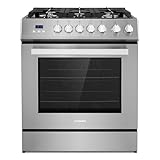
Overview: The COSMO COS-305AGC is a 30-inch freestanding gas range that delivers professional-grade cooking capabilities for the modern kitchen. With five sealed burners and a spacious 5.0 cubic foot convection oven, this appliance bridges the gap between budget-friendly options and premium pro-style ranges. It’s designed for home cooks who want reliable performance without sacrificing aesthetic appeal.
What Makes It Stand Out: This range distinguishes itself through its European-inspired design from the Nebula Collection, offering a sleek stainless steel finish that integrates seamlessly with contemporary kitchen decor. The sealed burner configuration provides precise heat control from an 18,000 BTU power burner down to a gentle 3,500 BTU simmer burner. The fan-assisted convection oven ensures even baking and faster cooking times compared to conventional ovens.
Value for Money: At $953.99, the COS-305AGC positions itself as a compelling mid-tier option. It undercuts many comparable convection-equipped ranges while delivering features typically found in more expensive models, including heavy-duty cast iron grates and corrosion-resistant stainless steel construction. The one-year limited warranty with US-based support adds peace of mind.
Strengths and Weaknesses: Strengths include versatile burner outputs, effective convection cooking, modern aesthetics, and easy-clean surfaces. The heavy-duty construction promises durability. Weaknesses are the separate purchase required for LP conversion, limited to four oven functions, and the absence of a storage drawer. Some users may find the control knobs less robust than commercial-grade alternatives.
Bottom Line: For homeowners seeking a stylish, capable gas range under $1,000, the COSMO COS-305AGC delivers excellent value. It successfully combines performance, design, and practicality, making it ideal for serious home cooks who prioritize convection baking and multiple burner options.
2. VEVOR Gas Range Oven, 36 Inches Width, Freestanding Stainless Steel Stove and Oven with 6 Sealed Cooktop Burners, Easy Reach Racks, Halogen Light, 6.0 Cu. Ft. Capacity, for Home Apartment Kitchen

Overview: The VEVOR Gas Range Oven is a 36-inch wide freestanding powerhouse designed for serious cooking enthusiasts and small commercial settings. With six sealed burners and a generous 6.0 cubic foot convection oven, this appliance maximizes cooking capacity and versatility. It’s built to handle everything from home meal prep to light commercial duty in RVs, hotels, or restaurants.
What Makes It Stand Out: The extra width and sixth burner set this range apart from standard 30-inch models, providing unmatched stovetop flexibility. The dual-fuel compatibility with both natural gas and liquid propane offers installation versatility. Halogen oven lighting and easy-reach racks enhance visibility and accessibility, while the digital display provides precise temperature control. The six adjustable rack positions accommodate various cooking configurations.
Value for Money: At $1,399, this range delivers substantial capacity for the price. Comparable 36-inch pro-style ranges often exceed $2,000, making VEVOR an attractive budget-conscious alternative. The included LP conversion capability and six-burner layout provide exceptional utility, though long-term durability may not match premium brands.
Strengths and Weaknesses: Strengths include expansive cooking surface, large oven capacity, flexible fuel options, and adjustable rack positions. The halogen lighting and digital controls are welcome upgrades. Weaknesses include aluminum burners (less durable than brass), potentially shorter lifespan under heavy use, and limited brand recognition for service support. The stainless steel finish may be thinner than high-end counterparts.
Bottom Line: The VEVOR 36-inch range is perfect for those needing maximum cooking capacity on a moderate budget. It’s ideal for large families, entertaining enthusiasts, or light commercial applications where six burners and a spacious oven are priorities over premium brand prestige.
3. Premium Levella PRE2025GW 20 in Freestanding Electric Range with 4 Coil Burners and 2.2 Cu. Ft. Single Oven Capacity with Lower Storage Drawer in White
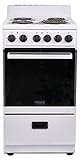
Overview: The Premium Levella PRE2025GW is a compact 20-inch freestanding electric range designed specifically for space-constrained environments. With four coil burners and a 2.2 cubic foot oven, this white-finished appliance serves apartments, condos, offices, and basements where full-size ranges won’t fit. It prioritizes essential functionality over advanced features.
What Makes It Stand Out: Its diminutive footprint is the primary differentiator, offering complete cooking capability in just 20 inches of width. The mirrored glass door provides a touch of elegance uncommon in compact appliances, allowing users to monitor cooking progress without heat loss. The lower storage drawer adds practicality in tight spaces where every inch counts. At 549.99, it’s one of the few truly compact electric ranges available.
Value for Money: This range delivers basic cooking functionality at an accessible price point. While $549.99 may seem high for its size, alternatives are scarce in the compact electric category. It includes essential features like an oven light and mirrored door, though the absence of a power cord requires additional purchase. For small-space dwellers, the value lies in its fit, not features.
Strengths and Weaknesses: Strengths include space-saving design, simple operation, lower storage drawer, and mirrored viewing window. It’s lightweight and easy to install. Weaknesses are outdated coil burners (slow to heat/cool), modest oven capacity, lack of convection, no included power cord, and basic temperature control. The white finish may yellow over time, and cleaning coil elements is cumbersome.
Bottom Line: The Levella PRE2025GW is a niche solution for those with severe space limitations. It’s not fancy, but it works. Choose this only if you absolutely need a 20-inch electric range. For anyone with space for a 24-inch or larger appliance, better options exist at similar prices.
4. FORNO Lazio Full Gas 30" Inch. Freestanding Range with 5 Italian Sealed Burners Cooktop - 4.32 Cu.Ft. Stainless Steel Convection Oven Includes Cast Iron Accessories

Overview: The FORNO Lazio Full Gas 30-inch Range brings professional Italian styling and performance to residential kitchens. Featuring five Italian Defendi sealed burners and a 4.32 cubic foot convection oven, this pro-style range targets cooking enthusiasts seeking restaurant-quality results. The package includes premium accessories and a comprehensive warranty.
What Makes It Stand Out: Authentic Italian Defendi burners deliver precise heat control from 9,500 to 19,000 BTU, with auto-reignition for safety. The included air fryer and cast iron accessories add immediate value. A soft-close door, three-layer glass viewing window, and two halogen lights provide premium user experience. The two-year parts and labor warranty surpasses industry standards, while the reversible griddle expands cooking options.
Value for Money: At $1,492, the Lazio competes with established pro-style brands costing $2,500+. The included LP kit, air fryer, and cast iron accessories (often $200+ separately) enhance value. While build quality may not match $3,000+ ranges, the feature set and warranty provide compelling justification for the price point.
Strengths and Weaknesses: Strengths include powerful Italian burners, comprehensive accessory package, superior warranty, safety features (auto-reignition), and premium touches like soft-close door. The convection system and halogen lighting perform well. Weaknesses include slightly smaller oven capacity (4.32 cu ft) than some competitors, type 430 stainless steel (prone to fingerprints), and limited brand recognition in North America. The black enamel surface plate may chip with heavy use.
Bottom Line: The FORNO Lazio is an excellent choice for aspiring home chefs wanting pro-style aesthetics and performance without premium-brand pricing. The included accessories and two-year warranty make it a smart value proposition. Ideal for those prioritizing burner quality and features over maximum oven capacity.
5. 30 Inch Freestanding Electric Range Oven, 4.8 Cu.Ft Stainless Steel Stove with 4 Burners Smooth Glass Cooktop, 6 Cooking Modes, Built-In Timer, 14900W Professional Kitchen Appliance, Silver

Overview: This 30-inch Freestanding Electric Range Oven combines modern induction-style aesthetics with traditional electric heating. Featuring a smooth black ceramic glass cooktop with four burners and a 4.8 cubic foot convection oven, this $899.99 appliance offers six cooking modes and a built-in timer. It targets homeowners wanting sleek design without the cost of true induction.
What Makes It Stand Out: The ceramic glass cooktop provides a premium look and easier cleaning than coil elements, while dual-ring burners offer flexible high-heat cooking. Six professional modes including pizza and keep-warm functions exceed typical range capabilities. The hot surface indicator light enhances safety, and the 14,900W total power delivers strong performance. Five rack positions provide excellent flexibility.
Value for Money: Under $900, this range challenges traditional coil-top electric models while offering near-induction aesthetics. The convection oven, multiple cooking modes, and ceramic top typically command $1,200+ from major brands. However, unknown brand reliability and potential service challenges should factor into the value assessment.
Strengths and Weaknesses: Strengths include attractive ceramic cooktop, versatile cooking modes, spacious oven, safety features, and competitive pricing. The dual-ring burner and five rack positions add flexibility. Weaknesses include unknown brand reputation, potential quality control issues, limited service network, and ceramic glass durability concerns. The 240V requirement may necessitate electrical upgrades. User manuals may lack clarity.
Bottom Line: This electric range is ideal for style-conscious buyers on a budget who want modern aesthetics and convection capability. It’s best suited for homeowners willing to accept some risk on brand reliability in exchange for features and design typically costing significantly more. Perfect for kitchen makeovers prioritizing appearance and functionality.
6. FORNO Massimo Freestanding 30-Inch Full Gas Range and Oven with 5 Italian Sealed Burners Cooktop - 4.32 Cu.Ft. Convection Stainless Steel Oven Includes Cast Iron Accessories
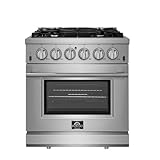
Overview: The FORNO Massimo 30-Inch Full Gas Range delivers professional-grade performance for serious home chefs. With five Italian sealed burners producing 68,000 BTU and a 4.32 cubic foot convection oven, this stainless steel appliance combines power with precision. The unit includes premium cast iron accessories and features a recessed cooktop design for easier cleaning.
What Makes It Stand Out: This range distinguishes itself with a sealed dual-ring burner offering exceptional temperature control for delicate tasks. The three-layer glass oven door with halogen lighting provides superior visibility while maintaining heat. Included accessories like the LP conversion kit, wok support, and reversible griddle add immediate versatility without extra investment. The continuous cast iron grates and electro-plated telescopic racks demonstrate attention to professional cooking needs.
Value for Money: At $1,989, the Massimo undercuts many comparable pro-style ranges by $1,000 or more. Competitors like Wolf or Viking charge premium prices for similar BTU output and build quality. The included accessories, robust construction, and Italian burner design offer exceptional value for homeowners seeking restaurant-grade performance without the luxury brand markup.
Strengths and Weaknesses: Strengths include powerful burners, even heat distribution, excellent visibility, and comprehensive accessories. The convection oven ensures consistent baking results. Weaknesses are the 30-inch width limiting simultaneous cooking projects and the price point may exceed casual cook budgets. The blue enamel interior, while durable, may show wear over time with heavy use.
Bottom Line: The FORNO Massimo 30-Inch range is an outstanding choice for passionate home cooks wanting professional capabilities. It delivers impressive power, thoughtful features, and solid construction at a competitive price point.
7. Premium Levella PRE2423GS 24 in Freestanding Electric Range with 4 Coil Burners and 2.6 Cu. Ft. Single Oven Capacity with Lower Storage Drawer - Silver

Overview: The Premium Levella PRE2423GS addresses compact living spaces with its 24-inch freestanding electric range. Featuring four coil burners and a 2.6 cubic foot oven, this silver unit fits apartments, condos, and office kitchens where space is premium. The mirrored glass door and lower storage drawer add practical functionality to this budget-conscious appliance.
What Makes It Stand Out: Its space-saving design is the primary differentiator, offering full cooking capabilities in a footprint that fits where standard ranges cannot. The mirrored door provides a modern aesthetic while allowing cooking progress checks without heat loss. The inclusion of a storage drawer maximizes utility in tight quarters, and the one-year product warranty with accessible customer service provides peace of mind.
Value for Money: At $799, this represents one of the most affordable full-function electric ranges available. While lacking advanced features, it delivers essential cooking capabilities for rental properties, secondary kitchens, or budget renovations. The cost savings must be weighed against coil burner limitations and the absence of an included power cord, requiring additional investment.
Strengths and Weaknesses: Strengths include compact size, affordability, mirrored door design, and dedicated storage. It’s ideal for small households or limited spaces. Weaknesses are the outdated coil burner technology, smaller oven capacity, missing power cord, and basic temperature control. The 1250-watt burners may struggle with rapid boiling or high-heat cooking.
Bottom Line: The Premium Levella is a practical solution for space-constrained environments prioritizing budget over performance. It reliably handles basic cooking tasks but won’t satisfy serious home chefs.
8. FORNO Massimo Freestanding 36-Inch Full Gas Range and Oven with 6 Italian Sealed Burners Cooktop - 5.36 Cu.Ft. Convection Stainless Steel Oven Includes Cast Iron Accessories

Overview: The FORNO Massimo 36-Inch Full Gas Range expands the Massimo line with six Italian sealed burners delivering 83,000 BTU and a cavernous 5.36 cubic foot convection oven. This stainless steel powerhouse caters to large families and entertaining enthusiasts. The unit includes heavy-duty cast iron grates, telescopic racks, and comprehensive accessories for professional-level cooking.
What Makes It Stand Out: The standout feature is the double-entry gas line on one burner, enabling simmering as low as 1,000 BTU—perfect for delicate sauces. The U-shaped burner design ensures optimal heat distribution throughout the spacious oven. Seven illuminated control knobs with automatic night lights add both safety and ambiance. The industry-leading two-year factory warranty demonstrates manufacturer confidence.
Value for Money: Priced at $2,487, this 36-inch range significantly undercuts competitors like Thermador and BlueStar while offering comparable power and capacity. The included LP conversion kit, concave wok ring, and robust construction make it a compelling value proposition for serious cooks needing maximum cooking surface and oven space.
Strengths and Weaknesses: Strengths include exceptional burner versatility, massive oven capacity, superior build quality, and comprehensive warranty coverage. The blue enamel interior and halogen lighting enhance usability. Weaknesses include the substantial space requirement, price point exceeding casual budgets, and potential overkill for smaller households. Installation may require professional gas line modifications.
Bottom Line: For those seeking professional-grade capacity and performance, the FORNO Massimo 36-Inch delivers exceptional value. It’s ideal for avid entertainers and large families demanding restaurant-quality results at home.
9. KoolMore 36 Inch Dual-Fuel Range Cooktop Stove with Freestanding Legs, Convection Cooking, and Large Capacity Stainless Steel Oven, Supports NG or LG, 4.3 cu. ft. (KM-FR36DF-SS)

Overview: The KoolMore KM-FR36DF-SS combines gas cooking precision with electric oven efficiency in a 36-inch dual-fuel format. Five brass cap burners provide versatile stovetop control while the 4.3 cubic foot convection oven offers seven pre-set cooking modes. The stainless steel design supports both natural gas and propane, featuring leveling legs for stable installation.
What Makes It Stand Out: Dual-fuel versatility at under $1,900 is remarkable, typically commanding premium prices. The seven smart pre-set functions—including pizza and defrost modes—simplify everyday cooking. Brass burners offer superior heat retention and corrosion resistance compared to standard aluminum. The manual control knobs with accurate timer provide intuitive operation without complex digital interfaces.
Value for Money: This range delivers dual-fuel performance for nearly $1,000 less than established competitors. While the 4.3 cubic foot oven is slightly smaller than some rivals, the convection efficiency and cooking mode variety compensate. For homeowners wanting gas cooktop control with electric oven precision, this represents exceptional value, though the lesser-known brand may concern some buyers.
Strengths and Weaknesses: Strengths include dual-fuel flexibility, brass burner quality, multiple cooking modes, and competitive pricing. The leveling legs ensure safe, even cooking surfaces. Weaknesses are the smaller oven capacity, limited brand recognition, and fewer burners than some 36-inch models. The absence of premium features like telescopic racks is notable.
Bottom Line: The KoolMore dual-fuel range is an excellent value proposition for performance-conscious buyers on moderate budgets. It successfully bridges gas and electric cooking advantages.
10. FORNO Leonardo 30” Espresso Black Slide-In Electric Induction Range – Convection Oven with 4 Cooking Zones, Smooth Touch Control Panel – Antique Brass & Stainless Handle Design – FEISR30B

Overview: The FORNO Leonardo FEISR30B brings induction technology to the Massimo line in a sophisticated espresso black slide-in design. Four cooking zones pair with a 5.0 cubic foot convection oven featuring a hidden bake element. The speckled blue enamel interior and antique brass accents create a distinctive aesthetic while delivering efficient, precise cooking performance for modern households.
What Makes It Stand Out: Induction cooking offers instant temperature response and superior energy efficiency compared to gas or traditional electric. The concealed bake element prevents spills from burning onto heating components, significantly simplifying cleaning. Friction-resistant hinges ensure smooth door operation even when loaded with heavy dishes. The espresso black finish with antique brass handles provides a unique, premium appearance that stands apart from standard stainless steel.
Value for Money: At $1,890, this induction range competes directly with mid-tier models from Bosch and GE Profile while offering distinctive styling. The hidden element and speckled enamel interior—typically found in premium ovens—add significant value. However, the slide-in design limits installation flexibility compared to freestanding models, potentially increasing retrofit costs.
Strengths and Weaknesses: Strengths include rapid induction heating, easy-clean oven design, even convection performance, and striking aesthetics. The 8,100-watt oven power ensures consistent results. Weaknesses include requiring induction-compatible cookware, the slide-in format’s installation constraints, and the dark finish may not suit all kitchen designs. Some users may prefer physical knobs over touch controls.
Bottom Line: The FORNO Leonardo is ideal for modern kitchens prioritizing energy efficiency, easy maintenance, and distinctive style. It delivers induction benefits with thoughtful design touches at a competitive price.
Understanding Batch Cooking Demands on Your Range
Batch cooking isn’t just regular cooking in larger quantities—it’s a fundamentally different workflow that pushes your appliance to its limits. You’ll be running your oven for 4-6 hours straight on prep days, cycling between multiple racks of proteins and vegetables, while simultaneously managing several pots on the cooktop. This constant, high-volume operation generates unique thermal loads and requires specific performance characteristics that casual cooking never tests.
The most successful meal preppers think in terms of throughput and efficiency. Your range becomes a production line, where downtime means wasted time. Heat recovery after opening the oven door, burner response time when adjusting temperatures, and even how quickly you can move pans between burners all impact your total prep time. A range optimized for batch cooking prioritizes consistent performance over flashy features you’ll never use.
Budget Reality Check: What $1,500 Actually Buys
The $1,500 price point sits in the appliance industry’s sweet spot—above entry-level models with flimsy construction and below premium features like built-in sous vide or steam injection. In this bracket, you’re shopping for durability and performance, not luxury. Expect commercial-style design cues without the commercial-grade price tag.
Manufacturers typically allocate budget to either cooktop power or oven sophistication, rarely both. You’ll need to decide which matters more for your meal prep style. Pasta-heavy preppers might prioritize burner output, while bakers and roasters should focus on oven technology. Understanding this trade-off prevents disappointment and helps you maximize value within your financial boundaries.
Gas vs. Electric vs. Dual Fuel: The Fundamental Choice
Gas Cooktops: Precision and Power
Gas remains the darling of serious cooks for good reason. The visual flame feedback allows instant heat adjustments crucial when juggling multiple pots. For batch cooking, look for ranges offering at least one high-BTU burner (15,000+ BTU) for rapid boiling and searing, paired with a true simmer burner that drops below 5,000 BTU for delicate sauces and slow reductions.
The downside? Gas ovens traditionally lack the precise, even heating of electric models. They also add humidity, which can be problematic for crispy roasted vegetables or meringues. If you choose gas, prioritize models with convection fans to mitigate hot spots.
Electric and Induction: Consistent Oven Performance
Electric ranges shine in oven performance, delivering dry, even heat perfect for roasting multiple trays simultaneously. The smooth cooktop surface makes sliding heavy pots between burners effortless—a subtle but significant advantage when you’re working with 12-quart stockpots.
Induction cooktops represent the premium choice within our budget, offering lightning-fast boiling and precise temperature control that surpasses gas. However, you’ll sacrifice oven quality at this price point, as induction ranges under $1,500 often pair excellent cooktops with mediocre ovens.
Dual Fuel: The Compromise Position
True dual fuel (gas cooktop, electric oven) rarely appears under $1,500 except in compact sizes or during major sales events. If you find one, scrutinize the oven capacity and burner configuration carefully—manufacturers often cut corners elsewhere to hit price points.
Cooktop Configuration: Maximizing Burner Real Estate
Burner Layout and Spacing
Batch cooking demands strategic burner placement. Look for ranges with at least one oversized burner (9-12 inches diameter) capable of accommodating large stockpots or canning kettles. The remaining burners should be spaced sufficiently apart to allow simultaneous use of multiple large pans without handles colliding.
Avoid configurations where all four burners cluster in a tight square. Instead, seek offset designs or models with a fifth center burner, which provides valuable extra real estate for keeping components warm while you finish other dishes.
Power Distribution Strategy
The best meal prep ranges feature a power burner (15,000-18,000 BTU), two medium burners (9,000-12,000 BTU), and a dedicated simmer burner. This distribution mirrors professional kitchen setups and prevents the frustration of having multiple weak burners that can’t maintain a rolling boil.
Oven Capacity: Size Matters More Than You Think
Cubic Feet vs. Usable Space
Manufacturers advertise total cubic footage, but this number includes unusable corners and space below the bottom element. For batch cooking, focus on usable width and depth. A 5.0 cubic foot oven with a wide, shallow configuration often outperforms a 5.8 cubic foot model with poor rack placement.
Measure your largest sheet pans and casserole dishes before shopping. Standard half-sheet pans (18x13 inches) should fit comfortably with space for air circulation. If you use commercial-style pans, verify they won’t jam against the oven walls.
Rack Position Flexibility
Look for ovens offering six or seven rack positions rather than the standard five. This flexibility allows you to position multiple trays in the optimal zones—roasting vegetables near the top, proteins in the middle, and starches below—maximizing simultaneous cooking without flavor transfer.
Convection Technology: The Batch Cook’s Secret Weapon
True Convection vs. Fan-Assisted
True convection (also called European convection) includes a third heating element behind the fan, creating consistent temperature throughout the cavity. This technology is non-negotiable for batch cooking. Fan-assisted convection merely circulates existing hot air, helping but not solving uneven heating issues.
With true convection, you can confidently load three racks of chicken breasts or roasted sweet potatoes, knowing they’ll cook evenly. Without it, you’ll waste time rotating pans and dealing with inconsistent results that ruin portions of your carefully planned meals.
Multi-Rack Convection Modes
Advanced ovens feature specialized multi-rack convection settings that adjust fan speed and temperature automatically. These modes compensate for the thermal mass of full oven loads, preventing the temperature drop that occurs when you load cold trays into a hot oven. While rare under $1,500, these features occasionally appear in holiday sales or last year’s models.
Oven Features That Transform Meal Prep Efficiency
Rapid Preheat and Recovery
Batch cooking involves frequent oven door opening. Each time, you lose 25-50°F of heat. Ranges with rapid preheat elements or powerful hidden bake elements recover temperature quickly, shaving precious minutes off your total cook time. Look for models advertising “fast preheat” or “rapid heat” capabilities.
Delayed Start and Timed Bake
These underappreciated features let you load the oven with morning prep (like overnight oats or egg bakes) and set it to start cooking while you’re at the gym or commuting home. For food safety, only use delayed start with foods that will remain refrigerated until cooking begins—never with room-temperature proteins.
Proofing and Dehydration Settings
A dedicated proofing mode maintains 85-100°F for bread dough, while dehydration settings run the oven at low temperatures with convection for making fruit chips or jerky. These specialized modes expand your meal prep repertoire beyond basic roasting and baking.
Durability: Building for the Long Haul
Component Quality Indicators
In the sub-$1,500 category, durability varies dramatically. Examine door hinges—they should feel solid and open smoothly without wobbling. Knobs should be metal, not plastic, as they’ll withstand years of daily use. Porcelain-coated steel cooktops resist scratches better than painted surfaces.
Check user reviews specifically for mentions of control board failures, which plague budget ranges. The control board is the brain of modern appliances, and replacement costs can approach $300. Ranges with simpler, electro-mechanical controls may lack fancy displays but often outlast their digital counterparts.
Build Quality Red Flags
Be wary of ovens with visible screws inside the cavity—they’re harder to clean and indicate cheaper construction. Thin oven doors that feel lightweight suggest poor insulation, leading to heat loss and longer cook times. Also avoid models with exposed bake elements on the oven floor; hidden elements are easier to wipe down and prevent drips from smoking.
Cleaning and Maintenance: Keeping Your Workhorse Running
Self-Cleaning Options
High-heat pyrolytic self-cleaning cycles are standard in this price range, but they stress oven components and can trigger control board failures. Consider models offering steam cleaning for light messes, reserving the high-heat cycle for quarterly deep cleans. Some ranges now feature “easy-clean” enamel interiors that release spills with just water and a wipe.
Cooktop Maintenance
Gas cooktops require periodic burner cap cleaning and igniter maintenance. Choose models with sealed burners that prevent spills from dripping into the burner box. For electric smoothtops, ensure the ceramic glass is genuine Schott Ceran, which resists scratching and thermal shock better than generic alternatives.
Size Constraints and Kitchen Integration
Standard Dimensions and Variations
Most freestanding ranges measure 30 inches wide, but depth and height vary. Verify the depth doesn’t interfere with traffic flow in galley kitchens. Height adjustments (typically via adjustable feet) help align the cooktop with countertops for a built-in look and easier sliding of heavy pots.
Backguard and Control Placement
Freestanding ranges include a backguard with controls, making them ideal for island installations or against walls without tile backsplashes. However, high backguards can block views or feel visually heavy. Some models offer low-profile backguards or front-control designs that provide a slide-in appearance at a freestanding price.
Ventilation: The Overlooked Critical Factor
CFM Requirements for Batch Cooking
Batch cooking generates significant smoke, steam, and grease. Your ventilation system should provide 1 CFM per 100 BTU of cooktop output. For a typical 60,000 BTU range, you’re looking at a 600 CFM hood minimum. Undersized ventilation leads to grease buildup on cabinets and lingering odors that permeate your carefully prepped meals.
Ducted vs. Ductless
Ducted ventilation always outperforms recirculating systems. If ducting isn’t possible, invest in a high-quality range with integrated downdraft or plan for frequent filter changes. Batch cooking’s high volume quickly saturates charcoal filters, rendering them ineffective.
Smart Features: Helpful or Hype?
Useful Connectivity
WiFi-enabled ranges offer genuine benefits for meal preppers: remote preheating, notifications when preheat is complete, and temperature monitoring via smartphone. Some apps even suggest optimal rack positions based on what you’re cooking. These features save time and prevent forgotten ovens from staying hot unnecessarily.
Feature Bloat to Avoid
Avoid ranges where smart features compromise core performance. A WiFi-connected oven with weak convection is still a weak oven. Also be skeptical of voice control gimmicks—yelling at your range while hands are covered in raw chicken feels futuristic but offers minimal practical value compared to a simple timer.
Energy Efficiency: Saving Money Over Time
Operating Costs in Batch Cooking
Running an oven for 5+ hours weekly adds up. Look for Energy Star certification, which saves approximately 15% on operating costs. Convection modes reduce energy use by cooking food faster at lower temperatures. Gas ovens typically cost less to operate than electric, but induction cooktops are the most efficient overall.
Standby Power Draw
Modern ranges draw phantom power for clocks and control boards. While minimal individually, it contributes to your home’s vampire load. Models with physical on/off switches for the entire unit eliminate this draw, though they’re increasingly rare.
Warranty and Support: Protecting Your Investment
Coverage Terms to Scrutinize
Standard warranties cover one year parts and labor, but premium brands sometimes offer five-year coverage on burners and oven elements. Read the fine print—some warranties exclude “commercial-style” usage, which could arguably include intensive batch cooking. Extended warranties through retailers often provide better coverage than manufacturer plans for avid cooks.
Service Network Importance
Before purchasing, verify qualified service technicians exist in your area for the brand you’re considering. A great range becomes a nightmare if the nearest authorized repair center is 200 miles away. Check online forums for brand-specific reliability data and common failure modes.
Installation Considerations and Hidden Costs
Fuel Type Conversion
Switching from electric to gas (or vice versa) adds $200-500 in electrician or plumber fees. Gas ranges require a dedicated 120V outlet for ignition, while electric needs 240V service. Dual fuel demands both, potentially doubling installation complexity.
Delivery and Haul-Away
Big-box retailers often include basic delivery but charge extra for hauling away your old range. Some municipalities require appliance disposal fees. Factor these costs into your $1,500 budget, as they can consume $50-150 of your appliance fund.
Common Mistakes Batch Cooks Make When Range Shopping
Prioritizing Aesthetics Over Function
That gorgeous professional-style range with red knobs might look stunning, but if the oven capacity is cramped and the convection is fan-only, you’ll regret it by your third meal prep session. Focus on specifications first, then filter by style.
Ignoring Oven Calibration
Many budget ranges run 25-50°F off from the factory. While calibration is possible, some digital controls make it maddeningly complex. If possible, test the oven temperature with an infrared thermometer in the showroom or immediately after delivery while you can still return it.
Overlooking Clearance Requirements
Ranges need side clearance for heat dissipation, typically 1-2 inches per manufacturer specs. Cramming a 30-inch range into a 30.5-inch opening violates warranty terms and creates fire hazards. Measure twice, and check installation manuals before finalizing your purchase.
Frequently Asked Questions
What’s the minimum oven capacity I should accept for serious batch cooking? Aim for at least 5.0 cubic feet of advertised capacity, but more importantly, verify the oven can hold three half-sheet pans simultaneously with proper air circulation. Anything smaller forces you to cook in more batches, defeating the purpose of efficient meal prep.
Is convection really necessary, or is it just marketing hype? For batch cooking, true convection is absolutely essential, not optional. It eliminates the need to rotate pans and ensures even cooking across multiple racks, which saves time and prevents food waste from unevenly cooked portions.
Can I install a gas range if my kitchen currently has electric? Yes, but budget an additional $300-500 for a licensed plumber to run a gas line and install proper shut-off valves. You’ll also need a 120V outlet for the ignition system, which most electricians can add during the same visit.
How long should a quality freestanding range last with heavy batch cooking use? With proper maintenance, a well-built range should last 10-15 years even with weekly batch cooking sessions. Look for models with easily replaceable burner elements and avoid those with known control board issues that tend to fail around year 5-7.
Are induction cooktops worth the premium for meal prep? Induction offers unparalleled speed and precision, boiling water in under 90 seconds and maintaining exact simmer temperatures. If you primarily cook on the stovetop, it’s worth stretching your budget. However, induction ranges under $1,500 often pair excellent cooktops with mediocre ovens.
What’s the difference between a self-cleaning and steam-cleaning oven? High-heat self-cleaning cycles burn off residue at 800-900°F, which can stress components but requires no chemicals. Steam cleaning uses water and lower temperatures (250°F) for light messes but can’t handle heavy buildup. The best ranges offer both options.
How important is BTU rating on gas burners? For batch cooking, you need at least one burner rated at 15,000+ BTU for rapid boiling and searing. However, higher isn’t always better—18,000+ BTU burners can be difficult to control at low settings. The key is having a range of power across all burners, not just one powerhouse.
Can I use my range’s delayed start feature for meal prep proteins? Only use delayed start for foods that will remain at safe temperatures until cooking begins. Never load room-temperature raw meat into a cold oven and set it to start hours later. For food safety, proteins should go from refrigerator directly into a preheated oven.
What’s the best way to test a new range’s oven accuracy? Purchase an inexpensive oven thermometer and test at 350°F, 400°F, and 450°F after the oven signals preheat. Wait 15 minutes after the preheat beep, then check multiple rack positions. If it’s off by more than 25°F consistently, request warranty service for calibration.
Should I buy an extended warranty for a batch cooking range? Standard manufacturer warranties rarely cover the full term of ownership. Given the intensive use batch cooking demands, a 5-year extended warranty covering parts and labor for major components (control board, heating elements, igniters) typically pays for itself if a single major repair is needed.